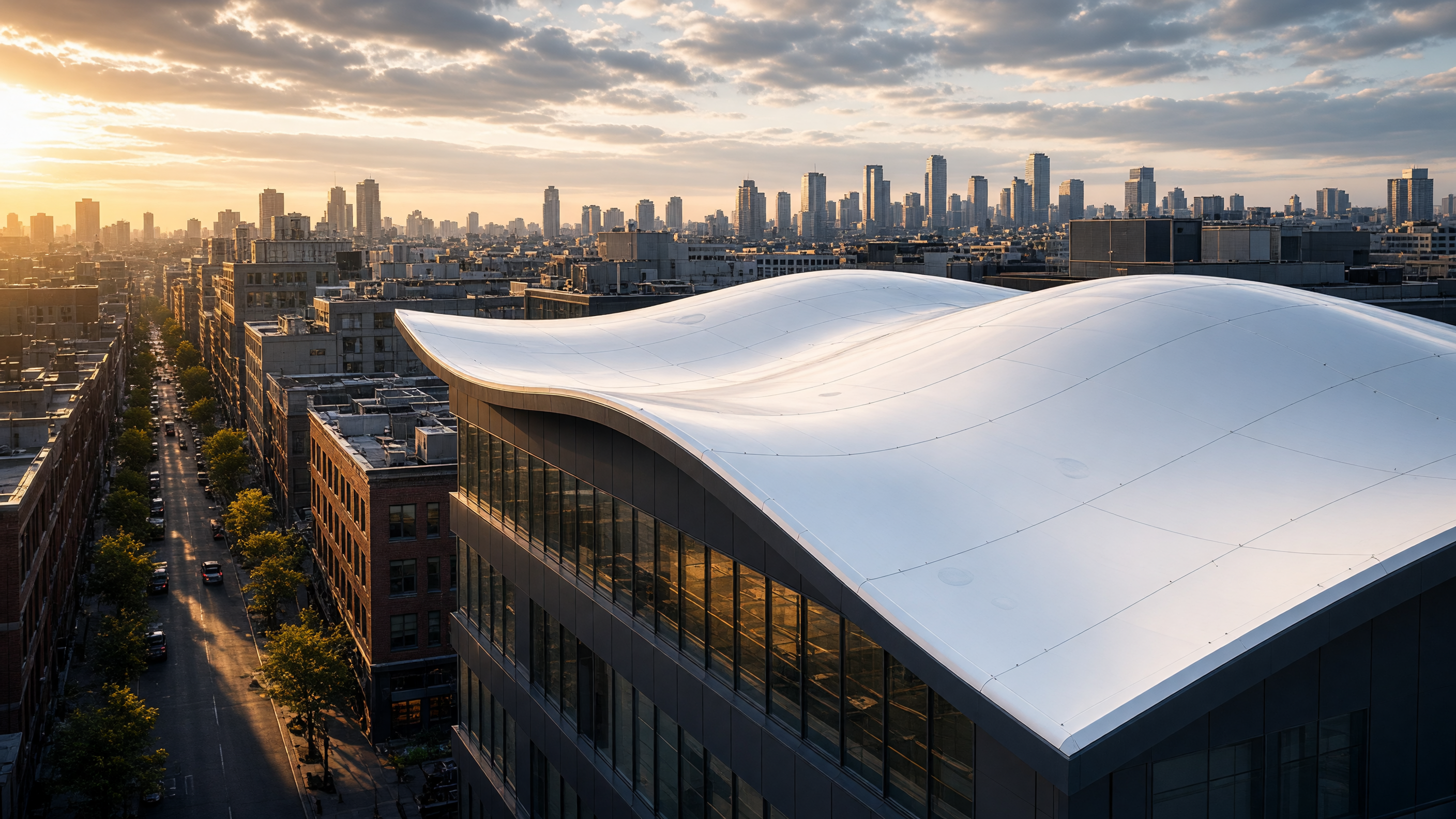
On a July afternoon in Queens, the black tar of an old apartment roof goes soft underfoot. Heat rises through the soles. The air just above the surface is a visible waver, a second, thinner city stacked on the first. Down on the sidewalk that same heat has nowhere to go. Brick, asphalt, and glass have been collecting it all day, and they give it back after dusk, so the night never quite arrives.
Cool roofs are, in one sense, an old idea. The limewashed houses of the Cyclades, the white courtyards of Andalusia, the plastered roofs of North African medinas were not aesthetic accidents. They were thermal instruments. A pale surface reflects what a dark one absorbs. Albedo—the fraction of sunlight returned toward space—is a number architects once knew by habit rather than formula.
In contemporary cities the number has become urgent. Urban heat islands form because we paved and roofed ourselves in materials that drink infrared. A conventional dark roof might reflect only 5 to 20 percent of incoming solar radiation. A cool roof—white coating, reflective membrane, or high-SRI tile—can send back 60 to 80 percent. Surface temperatures drop by fifty degrees Fahrenheit or more. Indoor cooling loads fall. The air above the building is less of a furnace.
New York’s CoolRoofs program has coated millions of square feet in white elastomeric paint, often with volunteer crews on weekends. You can see the patches from the air: pale rectangles interrupting the dark grid of tar. Los Angeles has written cool roofs into code. In Ahmedabad, after lethal heat waves, coatings on low-income housing have been measured to lower indoor temperatures by several degrees—enough, in rooms without air conditioning, to change whether a night is sleepable.
The sensory shift is quiet. Stand on a newly coated roof and the light is harder, almost Alpine. You squint. The membrane is cool enough to touch. Below, the top-floor apartment no longer feels like the lid of a pot. At street level the effect is slower and collective. If enough roofs refuse the heat, the neighborhood’s night air cools a little earlier. Trees help; shade helps; but the roof is the largest single surface most buildings offer the sun.
There are complications. In winter a reflective roof can slightly increase heating demand in cold climates, though studies in Chicago and Toronto suggest summer savings usually prevail, especially as winters warm. Glare can trouble neighbors and pilots. White membranes soil; their albedo declines unless maintained. Green roofs compete for the same square footage, offering stormwater and habitat that paint cannot.
Materials have grown more precise. TPO and PVC membranes arrive already reflective. Coatings are specified by solar reflectance index. Cool-colored tiles in terracotta and gray use pigments that bounce infrared while looking traditional from the street—a useful compromise on historic blocks where a glaring white plane would read as an insult.
I once walked a warehouse conversion in Brooklyn whose roof had been stripped of gravel and recapped in white TPO. The superintendents talked about leak rates and warranties. What I noticed was the quality of late light in the top-floor studios: less bounce of heat against the glass, a calmer interior even before the HVAC came on. July had lost some of its argument with the building.