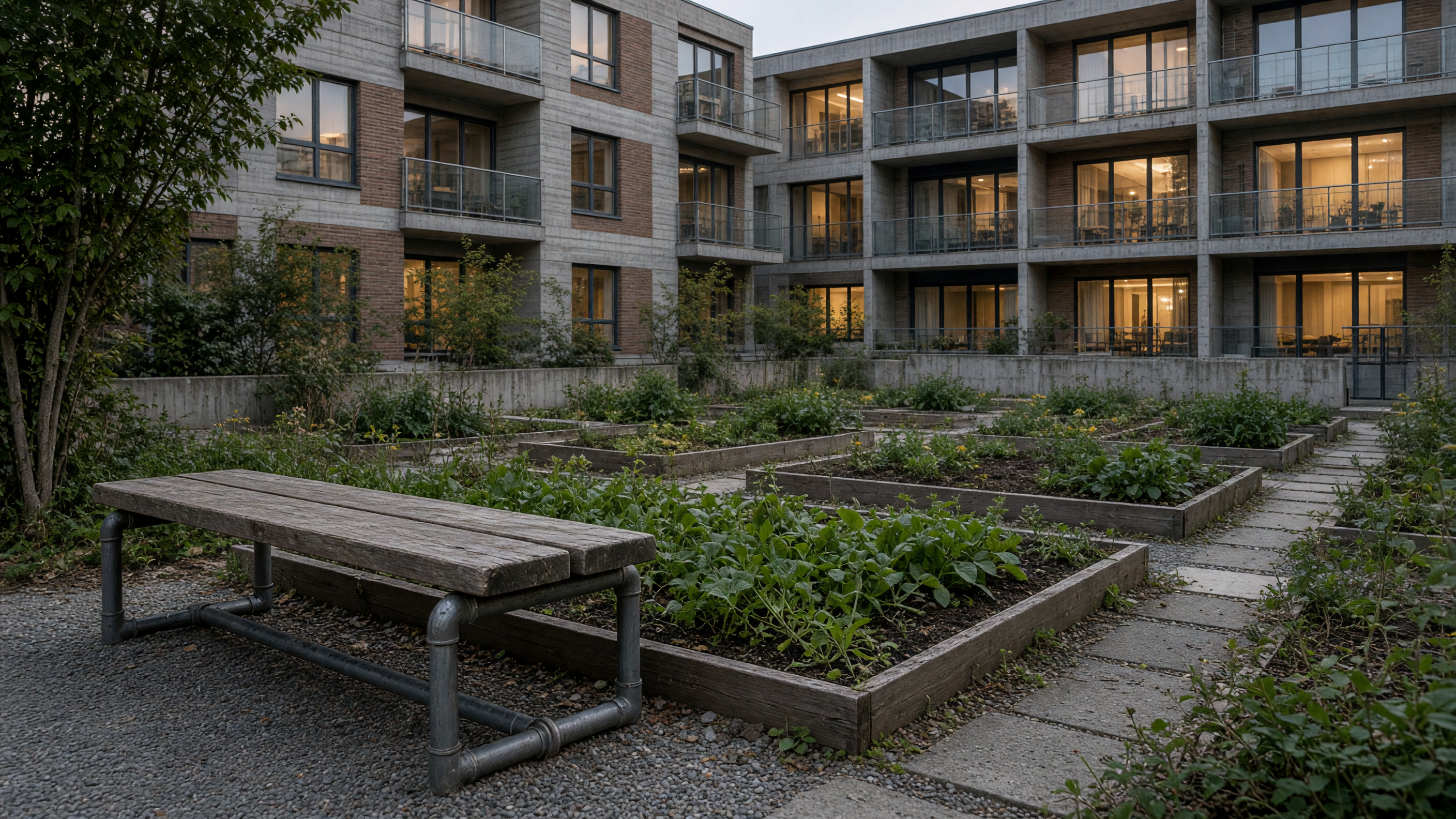
A few steps from the service door, a strip of ground between the parking lot and the alley has been turned into beds. The asphalt stops at a low concrete curb; on the other side, the soil has been turned and raked level. People who live in the building above keep keys to the gate. They come down after work with a bucket and a trowel, or they come on the weekend with a child in a stroller and a bag of seed packets. The garden is small enough that no one needs a map, but it is far enough from the front door that it is not part of the daily passage in and out.
The beds are framed with cedar planks set on edge and held with stakes driven into the ground. The wood has not been painted. It has gone gray where rain and sun reach it, and it stays darker where the soil touches it. At the south end a length of rebar has been bent into a low arch to support a length of shade cloth in midsummer. The cloth is stored on a nail inside the utility room when it is not needed. Nothing about the structure is hidden, and nothing is presented as finished.
The light changes quickly once a person steps off the pavement. The building casts a long shadow across the western beds in the late afternoon, so tomatoes and peppers are set toward the east where the wall is lower and the sky opens sooner. In winter the same wall holds a little warmth into the evening. On the north side a strip of grass has been left unmown. It collects seed heads and insect noise through the summer, and it gives the beds a soft edge against the fence.
Water comes from a single spigot mounted on the side of the building. A short length of hose lies coiled on a hook. Tenants share the hose without a schedule. When the soil dries out faster than expected, someone carries a note to the bulletin board in the lobby. The note is usually answered the same day. The arrangement works because the distance between the beds and the spigot is short, and because the people who use the water also pay the bill.
A concrete landing at the service door has become the place where tools are left to dry. A pair of gloves weighted with a stone keeps the corner of a tarp from lifting in the wind. The landing is swept when someone remembers, and left when no one does. The garden does not require constant attention, only the attention that comes when a person is already on the way to the car or the trash bins.
The beds sit low enough that a person standing on the sidewalk can see the tops of the plants without entering the gate. From the upper floors the same beds appear as a grid of dark rectangles against the lighter pavement. The view from above is useful on days when someone wants to check whether the beans have climbed the string before walking down. The garden is not a program or an amenity. It is a strip of ground that stays useful because the building already places people near it twice a day.