The houses that first held these rooms were built for families who came home at the end of the day and stayed put. Their long sills were set low so that winter light reached the floor and a child could stand at the glass without a stool. Now the same sills hold a laptop, a notebook, and the shadow of a chair that moves twice before noon. The change is quiet; the glass and the wood remain.
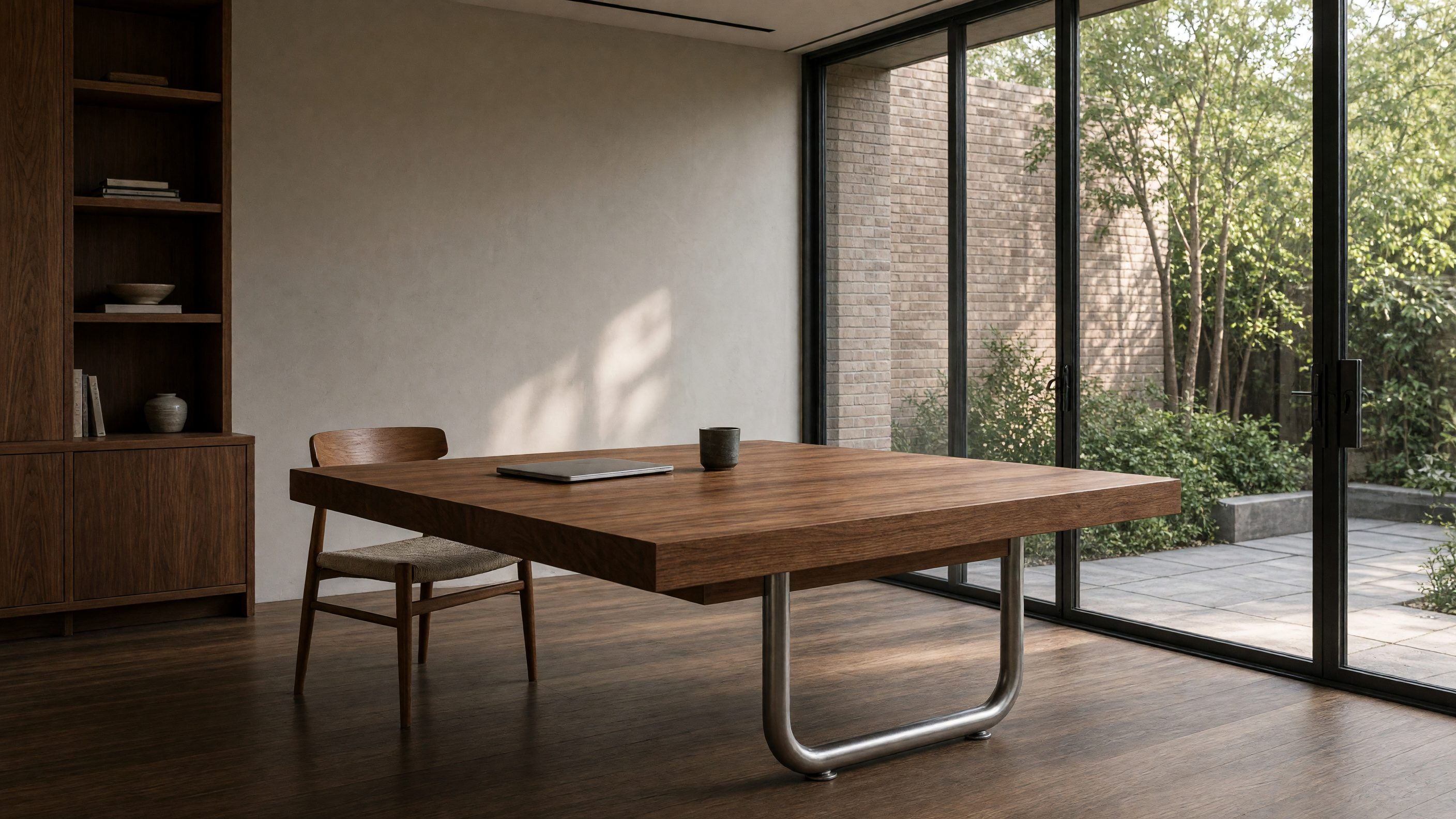
A steel tube leg under the desk keeps the surface clear from wall to wall. It was chosen because it could be carried up the existing stair without cutting the rail. The tube is thin enough to disappear against the light from the clerestory yet stiff enough to hold the weight of books and a second monitor. Nothing new was added to the ceiling; the original plaster remains unmarked.
The kitchen counter, once used only after five, now serves as a standing desk for an hour in the morning. Its edge is still the same maple board that once caught crumbs. A single outlet was added beneath the overhang, its plate set flush so that the cord drops straight and does not cross the walking path. The change is small, yet the room can shift from cooking to work without moving furniture.
Light in the middle of the day comes from the same south window that once warmed the living area. A linen curtain, left half-drawn, cuts the glare on the screen while still letting the floor stay bright. When the curtain is pulled fully open at dusk, the room returns to its older use. The fabric has no lining; its weave alone is enough to soften the beam without darkening the space.
The stair remains the same oak treads and painted risers. Its width was set for two people passing with laundry; now it also carries a printer up from the basement and a chair down to the curb on moving day. Because the handrail was never altered, the climb still feels familiar even when the purpose of the rooms below has changed.
Heat loss at the glass is managed by the same storm windows that were added in the 1970s. In winter the sills stay warmer than the room air because the wood holds a little heat from the low sun. No new mechanical system was installed; the original radiators are simply run longer on the days the desk is occupied past dark.
The walnut surface of the desk shows the small dents that come from years of keys and elbows. These marks sit beside the newer ring left by a coffee cup during a long call. The wood does not need to be pristine to remain useful; its finish is only wax, renewed once a year with a cloth. The surface records both the life that first shaped the room and the work now done inside it.