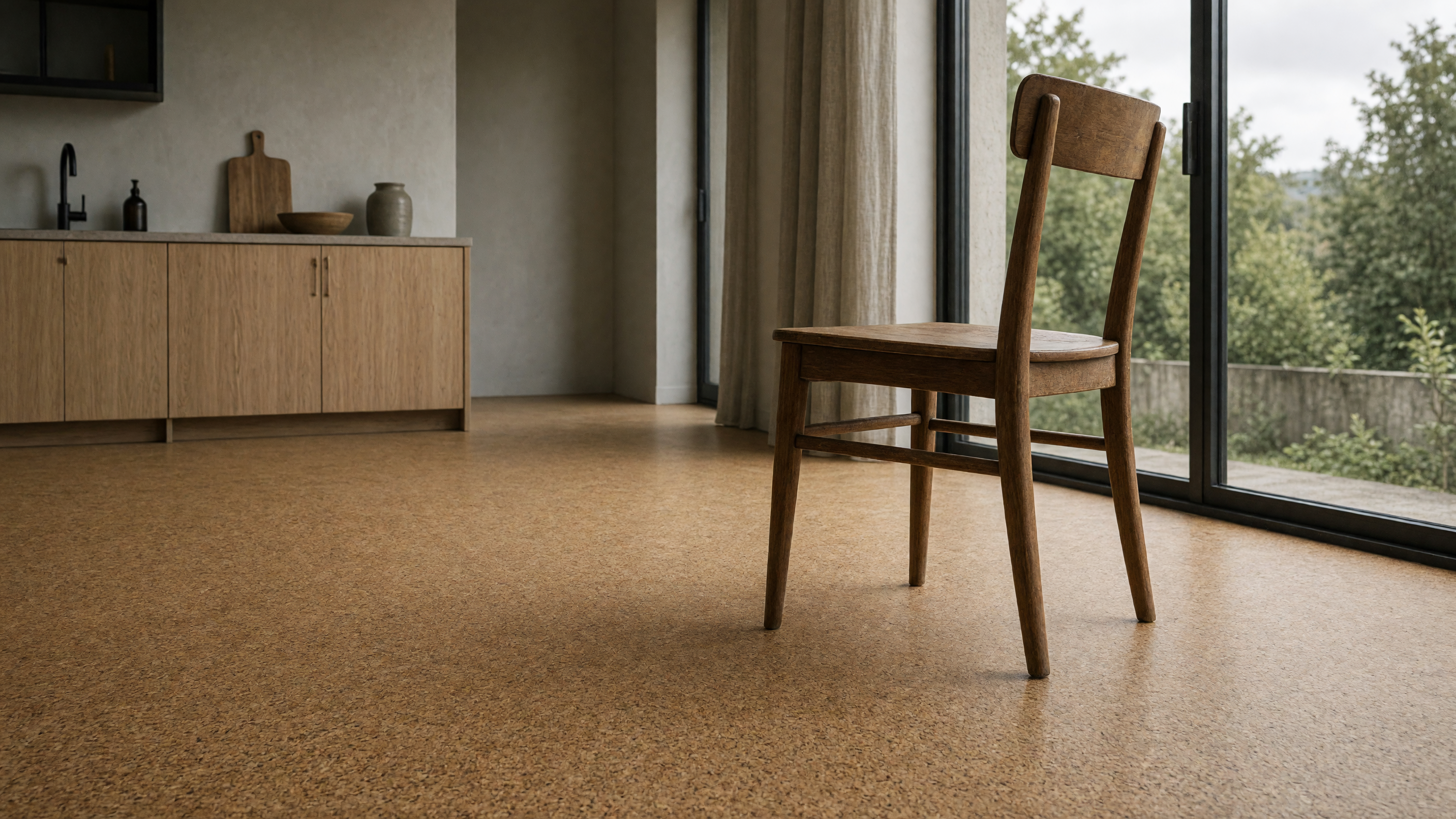
The material comes from the outer bark of the cork oak, harvested every nine years without cutting the tree. Once peeled, the bark is ground, steamed, and pressed into tiles or sheets with its own resins acting as the binder. The result is a floor that feels slightly resilient underfoot, never quite as hard as oak or concrete, yet firm enough for daily traffic. In a small house near the coast, the same tiles run from the entry through the kitchen and into a south-facing room where the light stays low most of the winter. No expansion joints appear at the thresholds; the material simply continues.
Because cork contains millions of closed air cells, it reduces impact noise between floors more effectively than thin wood or tile. In a two-story house the difference is noticed most on the stairs. A person climbing after the children are asleep does not send the same sharp sound through the upper rooms. The same cells also slow heat transfer, so the floor stays closer to room temperature when the heating system cycles off at night. Owners report that they rarely add rugs for warmth, only for color.
Cork accepts a water-based finish that can be renewed without sanding the entire surface. Every few years a thin coat is applied by roller after the furniture is moved aside for an afternoon. The finish darkens slightly with each renewal, recording the years in a way that varnish on wood does not. Scratches from pet claws remain visible but do not deepen, because the material gives a little rather than chips. Replacement is limited to individual tiles if damage is confined; the surrounding field stays in place.
In summer the same floor feels cooler than carpet yet warmer than stone. No radiant system is required beneath it. The thermal mass of the slab below does the work, and the cork simply mediates between slab and foot. In winter the same layer reduces the chill that rises from an uninsulated crawl space. Mechanical rooms above the floor stay warmer in shoulder seasons because less heat is lost downward.
The material is harvested within managed forests in Portugal and Spain. The bark renews itself, and the trees continue to sequester carbon between harvests. Transport energy is modest because finished tiles are light. At the end of its service life the flooring can be reprocessed into underlayment or burned for energy without releasing unusual toxins. These facts are rarely discussed while the floor is in use; they surface only when the house changes hands and the new owners ask what lies under the finish.
Cork was common in schools and hospitals through the middle of the last century, then largely disappeared under vinyl and carpet. Its return in houses follows the wider preference for materials that do not require frequent replacement and that age without demanding perfect maintenance. The surface develops a soft sheen where traffic is heaviest and keeps a drier appearance where furniture legs rest. That unevenness is accepted as part of the record of use rather than corrected.