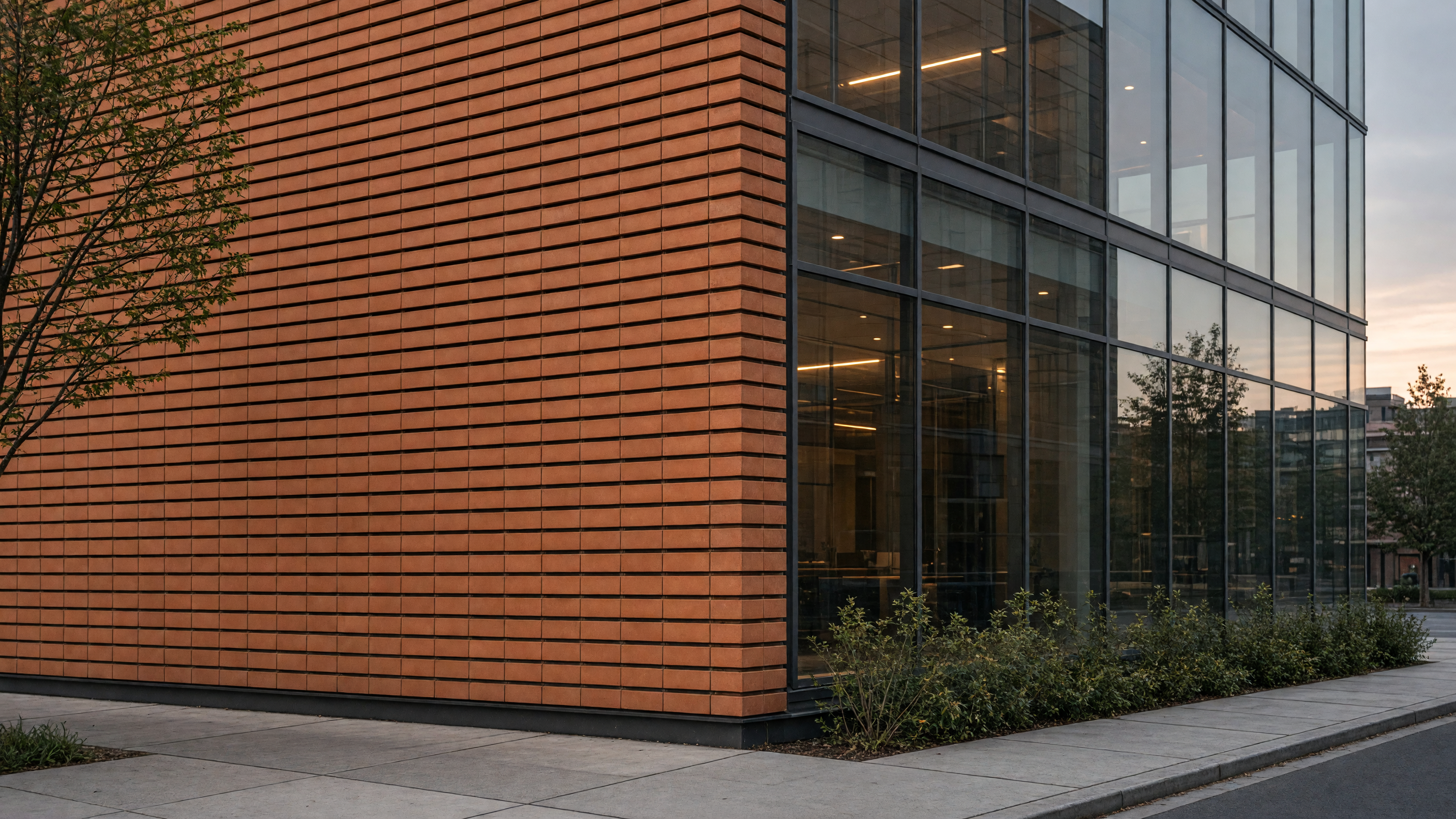
A clay tile has a weight you can feel in the hand before it meets the wall. In a recent building the tiles were set on small aluminum clips that allowed each piece to move a little with temperature and to drain water at the back. The joint was left open, so the surface stayed dry even after a long rain.
Inside, the same material reappears at the stair. The treads are thicker, cut from the same stock as the facade, and the riser faces carry a light wash of the same earth color. The stairwell receives light only from a narrow slot at the top, and the clay keeps the air cooler than the painted gypsum would. People pause there on warm afternoons because the temperature drops a few degrees without mechanical help.
The color of the tiles was chosen from a local clay body rather than from a catalog. When the sun is low, the surface warms to a soft orange that matches the brick of older buildings across the street. In the middle of the day the tone cools and the wall recedes against the sky. The change is slight, but it keeps the facade from reading as a single flat plane all day.
At the base the tiles stop above a granite sill that projects a hand’s width. The sill throws rain away from the joint and gives a place to rest a foot when people stop to tie a shoe. The detail is small, yet it prevents the lower courses from staining and keeps the maintenance crew from having to scrub the wall each spring.
Behind the tiles the insulation is mineral wool, held in place by the same clips that carry the clay. There is no continuous insulation board, so the wall can dry to the outside if moisture ever finds its way in. The air gap is vented at the top and bottom; on a breezy day you can feel the movement if you stand close and hold your palm near the open joint.
The building faces west. In summer the clay absorbs heat during the afternoon and releases it after sunset, which reduces the peak load on the cooling system. In winter the mass helps hold whatever warmth the low sun provides. The mechanical engineer sized the plant ten percent smaller than a comparable curtain-wall building, and the difference shows up in the monthly energy statements posted in the lobby.
Tenants have learned to open the slot windows on spring mornings. The clay surface, still cool from the night, pulls a light draft across the room. By late afternoon the same surface has stored enough sun to keep the room comfortable without the fan coil running. The pattern is simple, and it relies on the properties of the material rather than on added controls.