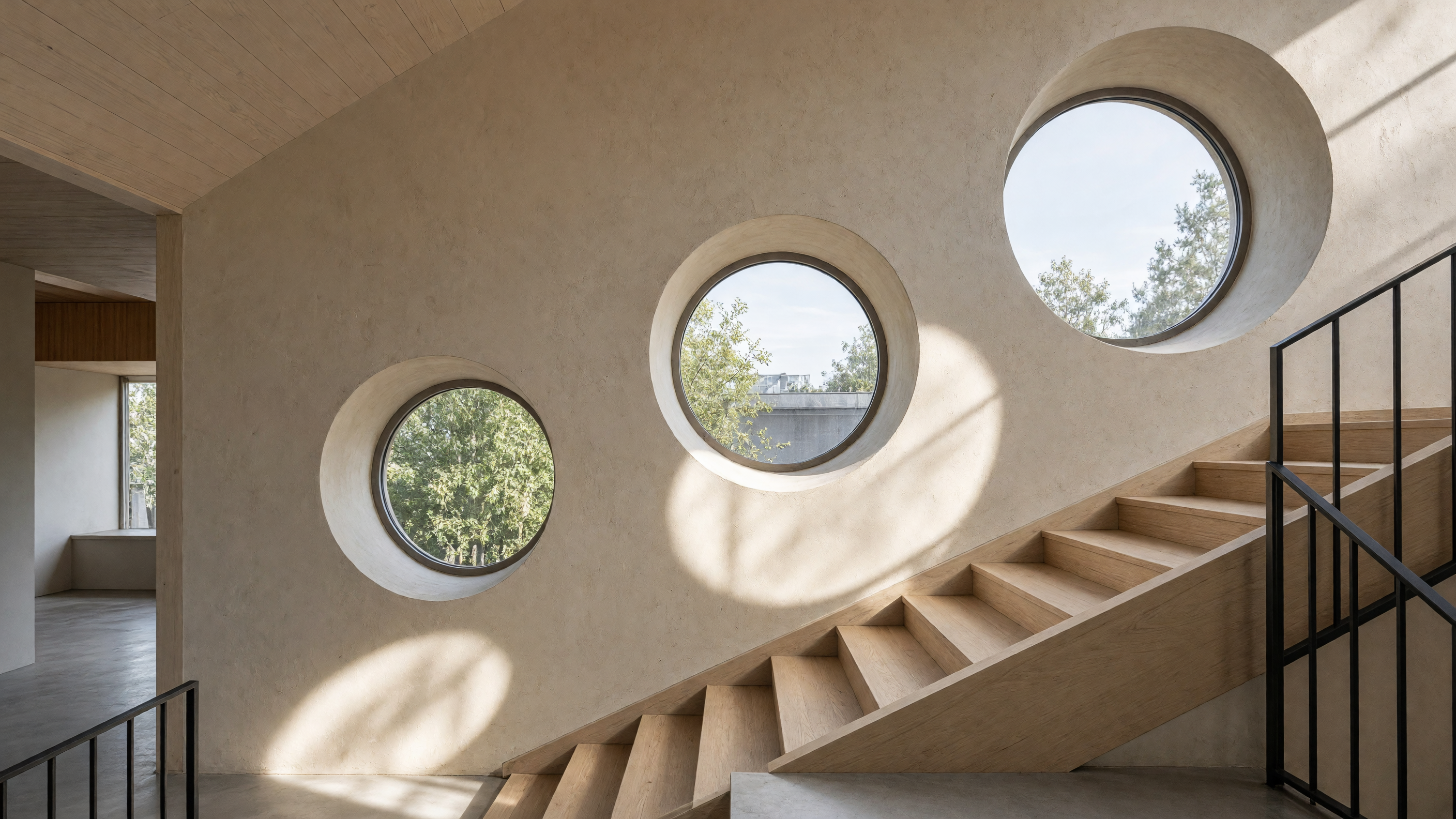
A round window sits in the gable end of a house on a narrow street. The glass is divided by thin steel bars that cross at the center, and the wall around it is the same thickness as the rest. From the landing you see a slice of sky and the top of a maple tree. The shape lets the light fall on the steps at different times of day without needing a wider opening.
The window came from an old mill building that was taken down two blocks away. The frame was measured on site, cleaned, and set into new masonry with a simple lead flashing. The builder kept the original putty and only replaced the cracked panes. Because the glass is small, the cost stayed low and the work took one afternoon.
In the room below, the circle breaks the line of the bookshelves. A reading chair sits under it, and the light lands on the page without a desk lamp. The curve also changes how sound moves in the room. Voices stay softer, and the echo from the hard floor is less sharp than it would be with a square opening of the same area.
Outside, the round frame catches rain differently than a rectangle. Water beads along the lower curve and runs off at two points instead of collecting at a corner. The joint between frame and brick stays drier, so the paint on the steel lasts longer without extra flashing or sealant.
The decision to use the old window came from the size of the lot. A tall rectangular opening would have faced the neighbor’s wall. The circle lets light in while keeping the view private. It also matches the remaining windows on the street, most of which were installed before 1920.
The stair itself is narrow, eight risers with a simple oak rail. At the top landing the round window sits just above eye level when you stand on the last step. The light there is enough to read the time on a wristwatch without turning on the switch.
The same opening works in summer and winter. In July the high sun passes through the upper half of the glass and warms the landing for a few minutes each morning. In December the low sun reaches farther down the wall and hits the floor. No extra shading or curtains are needed because the size of the glass limits the heat gain.
The builder left the interior face of the brick exposed around the frame. The mortar joints are struck flush, and the steel shows a few tool marks from the original fabrication. These marks are small and do not draw attention, yet they keep the window from looking like a new piece set into old work.