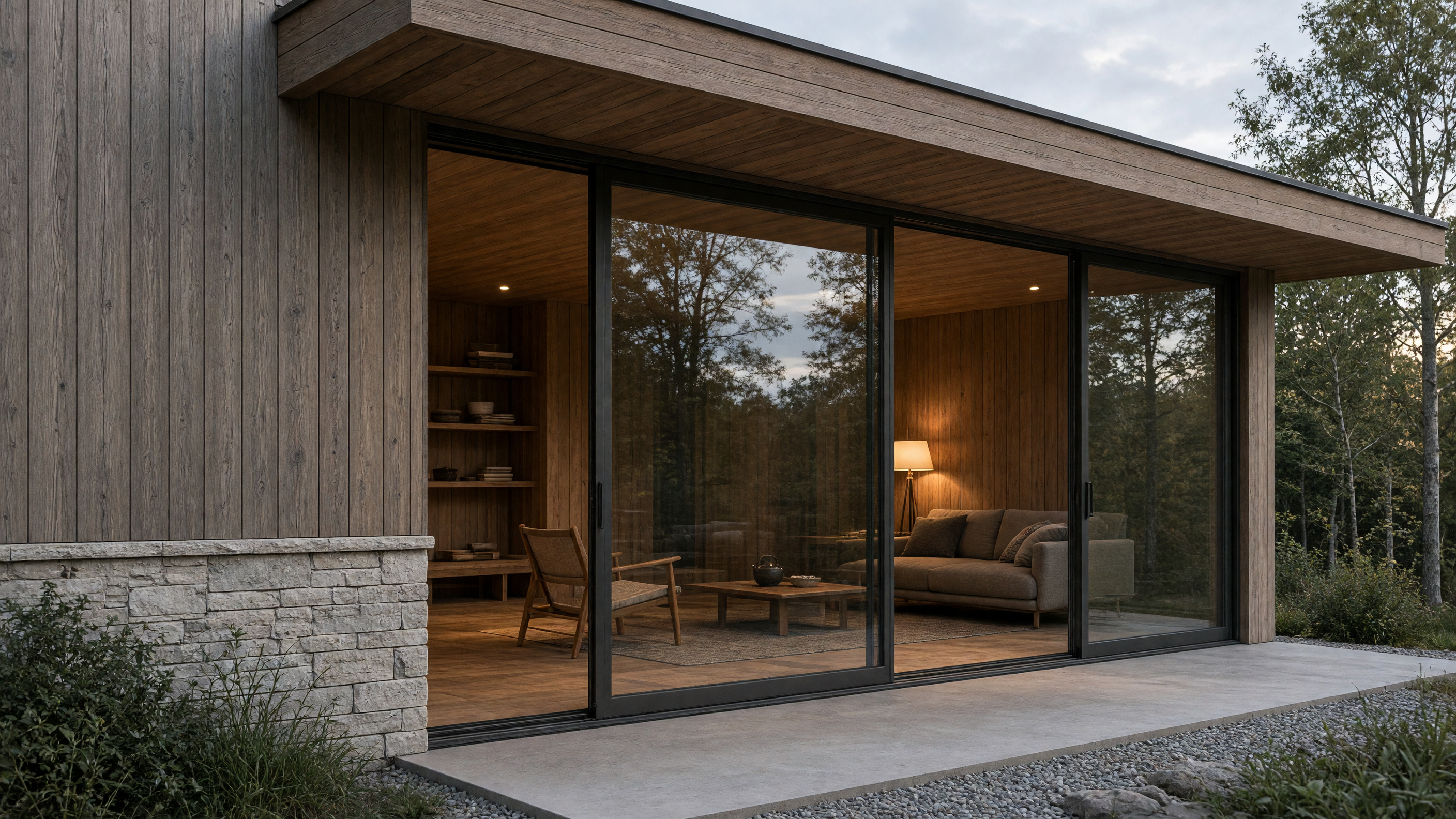
The house stands on a narrow city lot where the front porch once ended at a painted rail and an open view of the street. The new work keeps the roof, the posts, and the original floor plane but inserts a continuous wall of glass that can be opened or closed in a single motion. The glass sits behind the posts so the old rhythm of light and shadow remains visible from the sidewalk. Inside, a low bench runs along the inner face of the glass, its seat the same depth as the old porch swing. The bench holds cushions in summer and stacks of blankets in winter; the change is only a matter of fabric.
The floor is the original tongue-and-groove fir, now covered by a thin radiant mat and a washable rug. Heat rises from below rather than from a visible stove, so the room keeps the spare look of a porch even when the temperature outside drops below freezing. In summer the doors slide open and the mat is turned off; the space reverts to an ordinary shaded platform. The only added thickness is a narrow strip of insulation tucked behind the original siding, thin enough that the posts still read as the main structure.
Because the porch faces west, the glass receives low sun for several hours each afternoon. A linen roller shade, hung from the underside of the roof joists, drops on a cord and cuts the glare without darkening the room. In the evening the same shade reflects a little of the interior light back onto the ceiling, softening the contrast between inside and out. Neighbors walking past still see the posts and the roof edge; only the glow behind the glass signals that the space is now enclosed.
Furniture stays simple: two wooden chairs with loose cushions, a low table made from a single plank, and a floor lamp whose cord runs along the baseboard to an outlet added inside the original wall. No new foundation was poured. The existing piers were checked, one corner post was sistered with steel, and the rest of the frame was left untouched. The work took less than three weeks once permits were in hand.
The same porch, before the glass was added, had been used only from May to September. Mail was left on the bench, packages stacked by the door, and the space stood empty the rest of the year. Now the bench holds a winter coat in the morning and a stack of library books by evening. A neighbor stops to talk through the open glass on mild days; on colder ones the conversation moves inside without anyone leaving the room. The change is small in plan yet alters the daily pattern of the house more than any larger addition could.