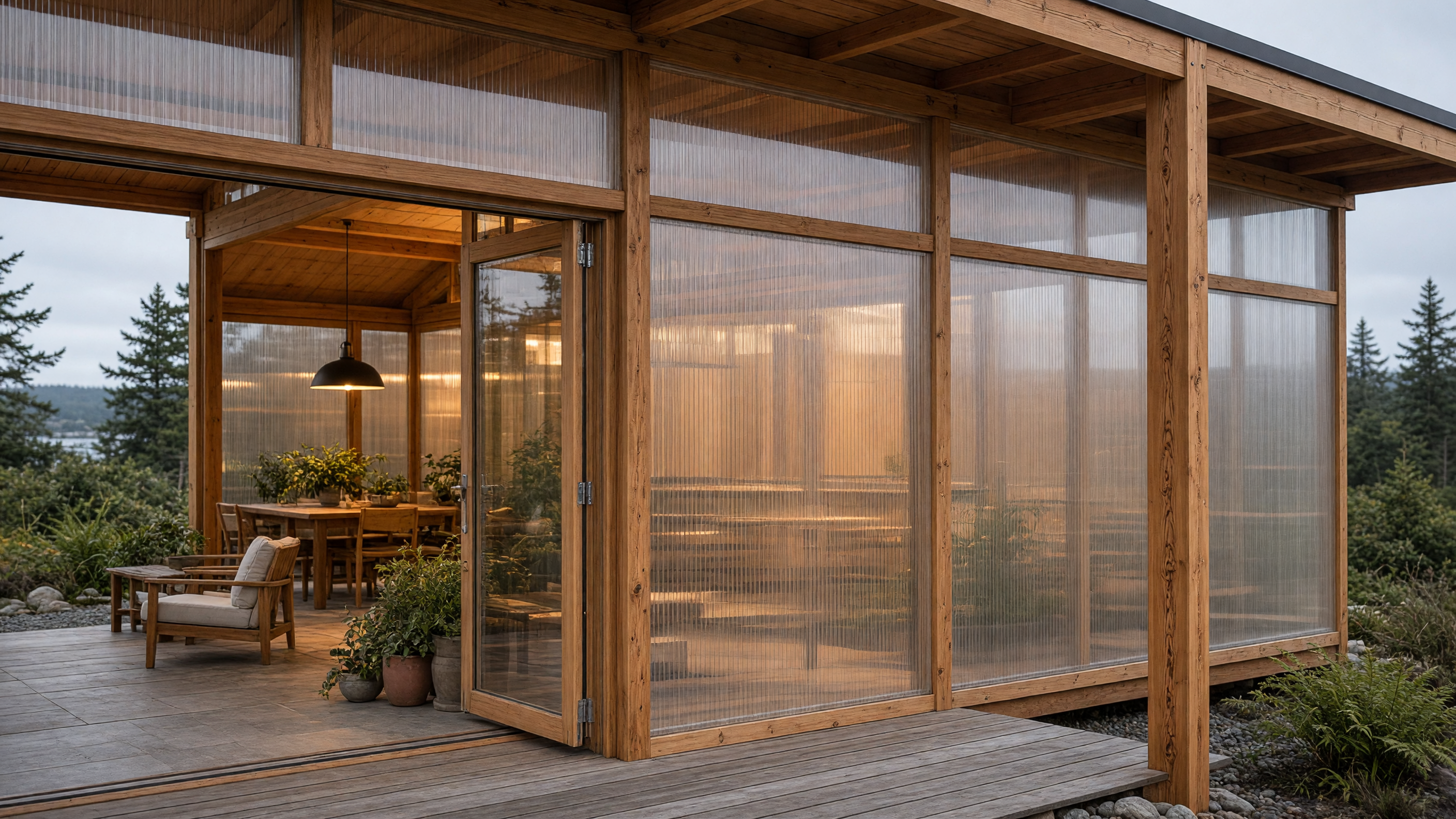
A sheet of polycarbonate bends slightly when you lean on it. The deflection is small, but it is enough to keep a joint from cracking when the temperature swings forty degrees in a day. In the house, that same sheet becomes the south wall of the kitchen. Morning light comes through it without the hard edge that glass gives. The floor warms under bare feet, and the cook can watch steam rise from the kettle while the garden soil still holds frost.
The frame is not a curtain wall system. It is ordinary 2x6 cedar, planed smooth on the outside and left rough inside. The wood moves with the plastic, so the builder did not need neoprene gaskets or aluminum pressure plates. Every few years the cedar needs oil; the polycarbonate is simply washed with a hose. The joint between the two materials is a rabbet and a bead of silicone. Nothing more.
The room that results is neither fully inside nor fully outside. A table can sit against the plastic wall without glare on a laptop screen, yet a potted lemon tree winters there without extra heat. In summer the same space stays cool because the polycarbonate diffuses direct sun and the cedar frame allows a low strip of operable vents at the base. Air moves across the floor, not across the ceiling, so the room never feels stuffy even when the door to the yard stays open all afternoon.
At night the wall changes again. Interior lights turn the plastic into a soft plane that shows the grain of the cedar behind it. From the garden the house looks lit from within rather than lit on its surface. A neighbor walking past sees only a quiet glow and the outline of a chair. The effect is ordinary, yet it depends on the thickness and the texture of the sheet, details decided before the first board was cut.
The same material continues on the roof of a small shed that holds garden tools. There the polycarbonate is corrugated, screwed to purlins, and left open at the ridge. Rain noise is softer than on metal, and enough light reaches the bench that the owner can sort seed packets without turning on a lamp. The shed shares the same sill height as the kitchen wall, so the eye reads both structures as one enclosure even though one is heated and the other is not.
Because the plastic is light, the foundation stays simple. A thickened edge slab carries the cedar posts directly; no steel moment frames or deep footings are required. The builder could set the whole assembly by hand after the concrete cured. That lightness also means the house can be taken apart without heavy equipment if the owners ever want to move the kitchen wall a few feet or replace a damaged sheet. The joint remains visible, a reminder that the building is an assembly rather than a single poured form.