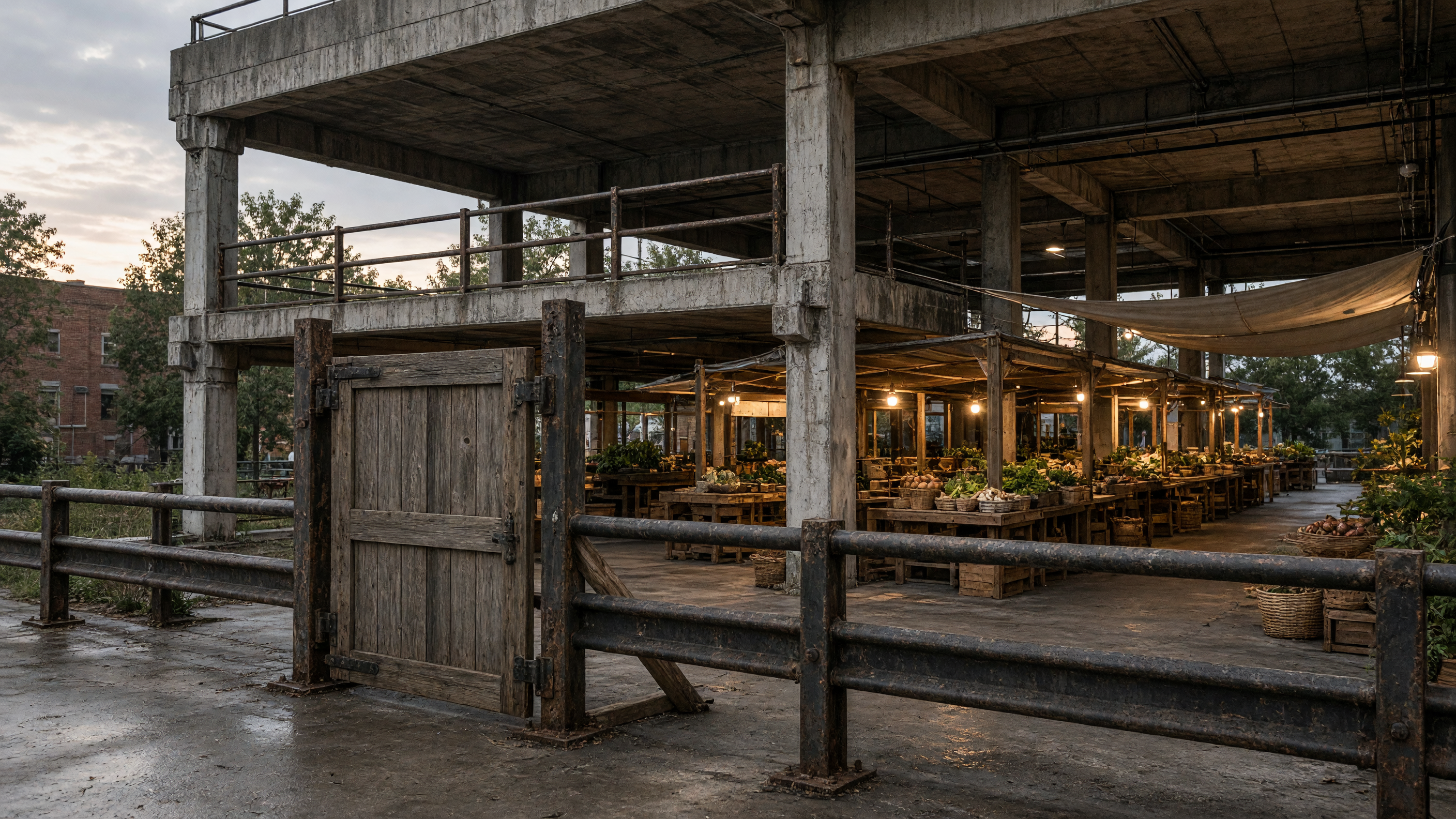
The structure was poured for cars, yet the bays are wide enough for two rows of tables and a central aisle. The slab already drains to the ramp edge, so no new plumbing is required when the south face is opened. A single row of steel posts is added just inside the original guardrail line. Each post carries a hinge that lets a full-height door swing outward in good weather and close against wind-driven rain. The doors are made from the same tube sections used for the guardrails, skinned with translucent corrugated plastic. When closed they admit light without glare; when open they fold flat against the next bay so the market aisle stays clear.
Inside, the merchants set their crates on low platforms cut from the plywood forms that once shaped the ramp curbs. The platforms rest on rubber blocks so they do not stain the concrete. Produce stays cooler on these low stands because the slab beneath them never receives direct sun. Shoppers move between the rows without stepping onto the vehicle lanes, which remain open for deliveries until ten in the morning. After that hour the lanes are swept and become part of the walking path that leads to the stair at the northwest corner.
The stair itself is untouched except for a coat of nonslip paint on the treads. Its handrail, welded pipe painted the same gray as the original structure, shows the same wear pattern on both sides: a polished band where countless hands have passed. The paint has worn through at the grip, exposing the metal, yet the rail remains sound because it was sized for the weight of a guard cable, not merely for a hand.
Ventilation comes from the open north and east faces and from the gaps left between the new doors when they are closed. On summer afternoons the air moves upward along the ramps and out through the top deck, carrying away the smell of fish and cut flowers before it can linger. In winter the same movement is slowed by canvas curtains hung from the top beam of each door frame; the curtains are rolled and tied when the temperature rises above fifty degrees.
No mechanical cooling is installed. The mass of the concrete, combined with the steady exchange of air, keeps the interior within a few degrees of the shaded street. On the rare days when the market must close because of extreme weather, the doors are secured with the same padlocks used on the parking gates, and the space returns to its original use within an hour. The only permanent addition is a water line tapped from the standpipe that once served the car-wash bay on the ground floor. A single spigot at each level supplies the produce vendors and the flower sellers, and the runoff follows the original slope to the existing floor drains.