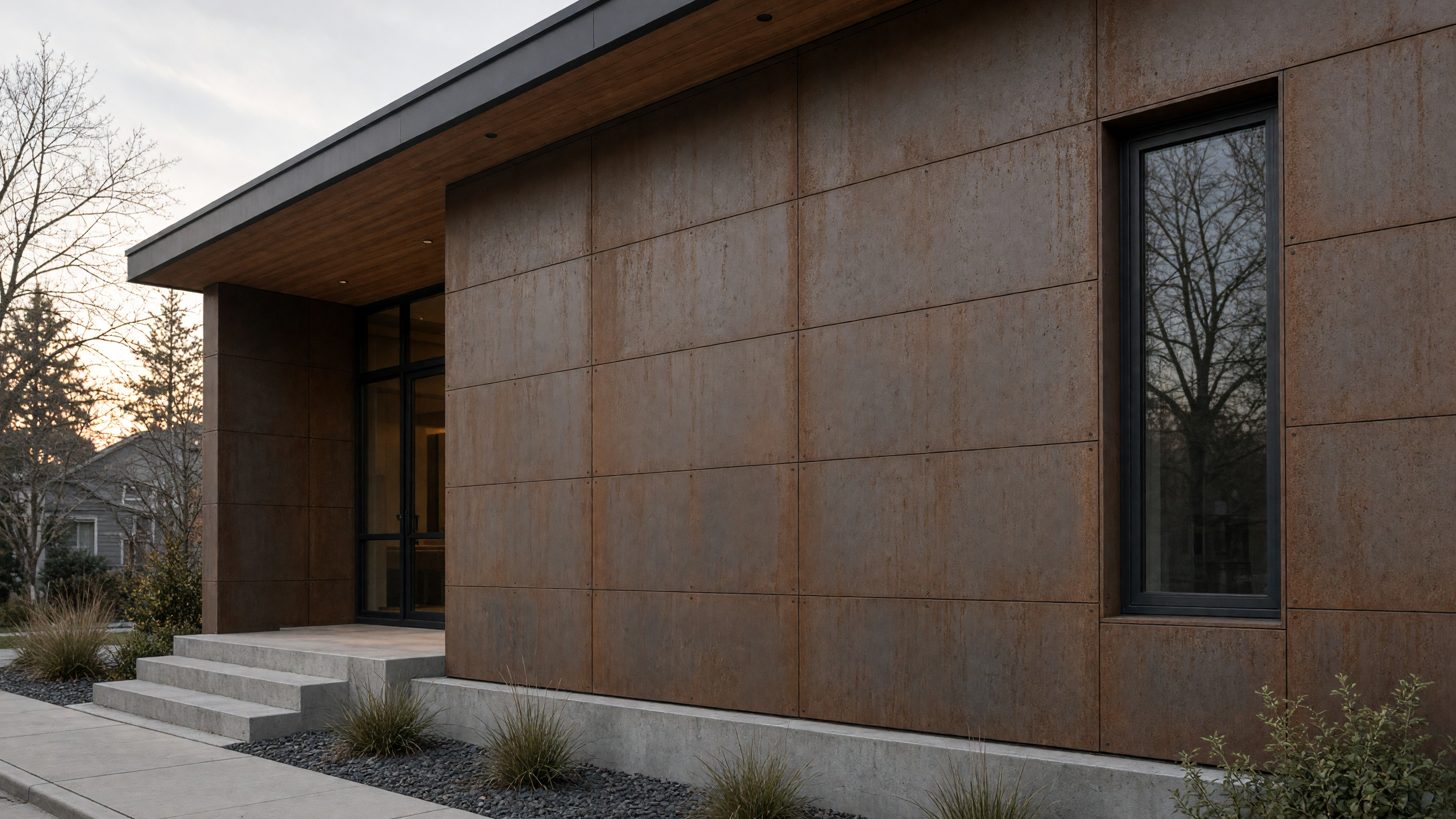
Corten steel began as a bridge material meant to shed paint and keep its strength. In suburban work it has come back for the same reason: it does not need maintenance once the oxide layer settles. A typical panel sits on a simple pressure-equalized rainscreen. The joint is a folded hem that turns water outward before it reaches the screw line. The surface takes a month or two to stabilize, then the color holds for decades without attention.
The light on such a wall changes with the sky rather than with the material itself. On an overcast morning the steel reads cool and almost blue. At noon it warms to a deep orange-brown that absorbs rather than reflects glare. In late afternoon the same surface can appear almost black against the lighter siding of the house next door. Because the color is produced by oxidation rather than pigment, it does not fade unevenly and the house does not look newly painted one year and worn the next.
Inside, the cladding affects more than the outside temperature. A continuous layer of mineral wool behind the steel keeps the framing cavity dry even when driving rain strikes the wall for hours. The mass of the steel itself stores a small amount of daytime heat and releases it after sunset, which reduces the swing felt in rooms that face west. Homeowners report that the furnace runs less on clear winter days and the air conditioner starts later on summer evenings.
The choice also changes the way the house meets the ground. At the base the steel stops eight inches above the finished grade on a stainless-steel angle. This keeps road salt and lawn fertilizer away from the oxide layer and prevents the dark staining that appears on concrete when rust washes downward. The gap is covered by a simple gravel strip that drains quickly and needs no weeding once the plants above it fill in.
On the street the wall registers as a single plane rather than a collection of boards or shingles. That plainness can make the house seem smaller than its square footage, which suits neighborhoods where larger footprints have become the norm. The steel does not compete with brick or wood siding on the same block; it simply registers as another permanent surface that will not require repainting or replacement on any normal homeowner schedule.
The same surface works at the roof edge. A continuous Corten fascia folds down from the roof plane and meets the wall without a separate trim piece. Because both planes move at the same rate with temperature change, no joint opens in winter and no sealant is required. The roof drainage runs behind this fascia and exits through scuppers that sit four inches proud of the wall, so water never streaks the face.