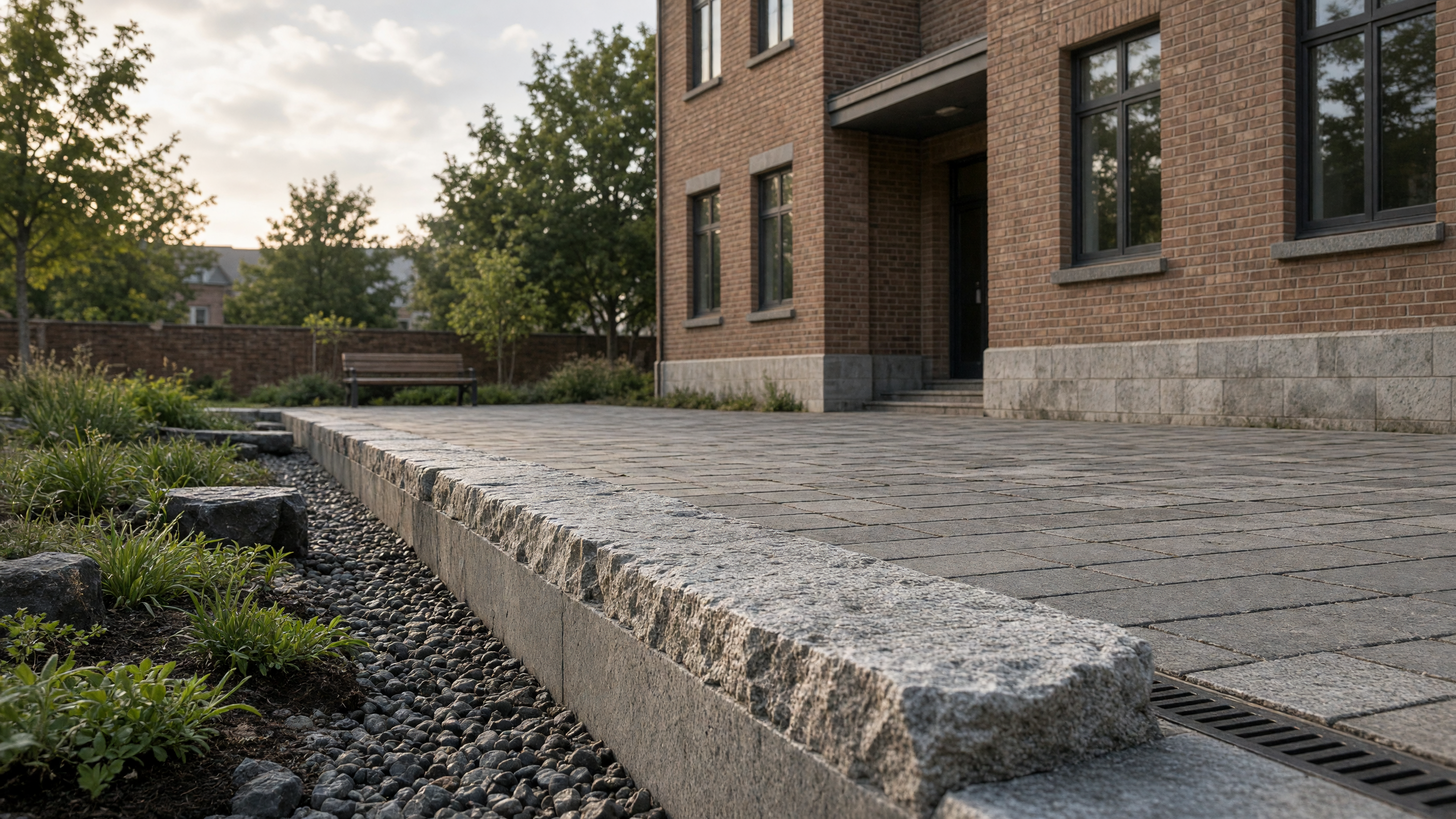
The square sits at the low point of a short residential block. Its four sides are lined by three-story brick buildings whose ground floors open directly onto the paving. Before the work, rain collected against the sills and ran into two basement apartments on the north side. The city kept the benches and the plane trees and altered only the surface and what lies beneath it.
New pavers were set on a bed of crushed stone that rests on a shallow clay basin. The basin slopes to a single outlet pipe no wider than a dinner plate. Water that passes through the joints in the pavers collects in the stone, then moves slowly toward the pipe and into the combined sewer two blocks away. The slope is slight enough that the surface remains flat for walking and for tables set out by the café at the southeast corner.
At the edge where the old lawn met the street, the masons lowered the curb stones so their tops sit level with the pavers. The lowered stones still keep cars from mounting the walk, yet a person pushing a stroller crosses without a bump. In the northwest corner a downspout from the roof above now ends in a small stone dish the size of a wash basin; water strikes the dish and spreads before it reaches the grate. The dish prevents a single hard stream from loosening the joint between paver and curb.
On ordinary days the square is used as before. Residents cross it on the way to the bus stop, children play between the trees, and the café places chairs near the south wall where the afternoon sun reaches the paving. After a storm the difference appears only at the grate: water disappears rather than standing against the brick. No tanks or pumps are visible, and the trees continue to cast the same shade across the open ground.
Twice a year a crew sweeps the joints and lifts the grate for a few minutes. The work is done by hand; no vehicle enters the square. The cost was carried inside the ordinary paving contract, so the drawings showed only a section through the stone bed and the outlet pipe. The change required no new hearings beyond those already scheduled for sidewalk repairs.
The lowered curb stones now carry a faint white line where tires have brushed them. The line will darken with time, but the height of the stones will remain the same, keeping the surface open to both daily use and the slower movement of water.