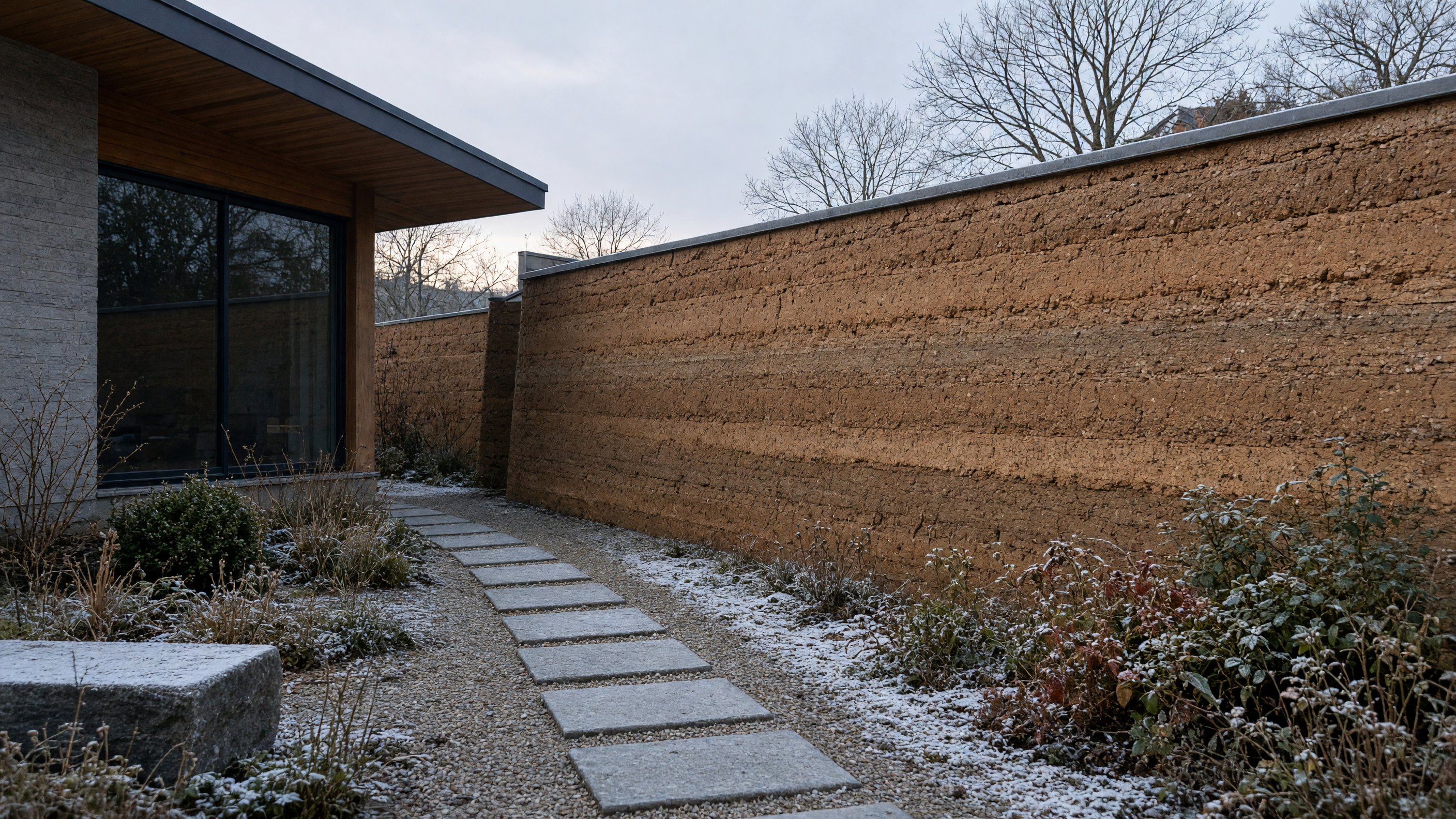
A rammed-earth wall holds the day’s heat after the sun has dropped behind the roof line. In the garden behind a suburban house the wall faces south and runs just long enough to shade a narrow bed of tomatoes. By late afternoon the surface is warm to the touch, and the air that drifts across it keeps the leaves from chilling when the first cool air settles in the yard.
The earth for the wall came from the excavation for the house itself. Mixed with a small amount of cement and water, it was compacted in forms until the layers read like the rings of a tree. Once the forms were stripped, the wall stood twelve inches thick and eight feet high. Its color matches the exposed soil at the edge of the lawn, so the structure appears to have risen from the same ground that now holds the garden beds.
Because the wall stores heat, the soil against its base stays several degrees warmer than soil against a wooden fence. Gardeners in the neighborhood notice that the first hard frost of autumn arrives later on this side of the yard. In spring the same stored warmth pushes seedlings ahead of those planted only a few feet away. The difference is modest, yet it lengthens the usable season without added fuel or glass.
The wall also breaks the wind that funnels between neighboring houses. On days when the air moves steadily from the northwest, the sheltered strip stays calmer and the moisture in the beds evaporates more slowly. A simple bench built into the thickness of the wall gives a place to sit where the air feels still. The bench surface is the same compacted earth, finished only with a coat of linseed oil that deepens the color and keeps dust from lifting when someone brushes against it.
Rain does not harm the wall once it is cured. The top is capped with a narrow concrete coping that sheds water clear of the face. Over time the surface takes on a light dusting of moss along the north side, a sign that the material is breathing rather than sealed. Repairs, when needed, are made by mixing a new batch of the same soil and tamping it into any small voids that appear after a hard winter.
Inside the house the wall continues as a partition between the kitchen and the rear entry. The thickness keeps the two rooms thermally separate, so the kitchen can be warmed in winter while the entry stays cooler. A single doorway cut through the mass shows the full depth of the material and reminds anyone passing that the same earth outside is now inside, doing the same quiet work of holding temperature steady.