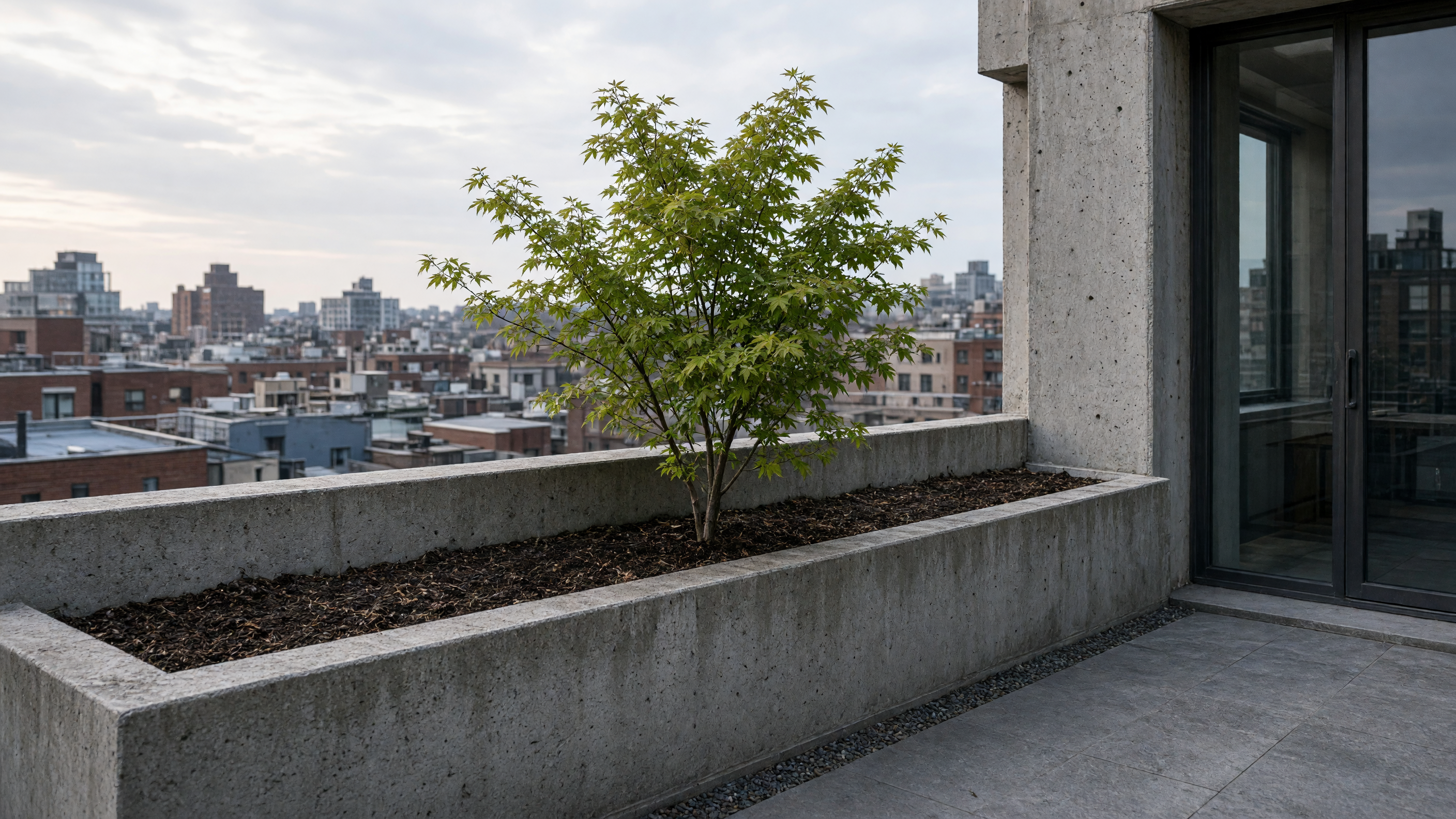
The building sits on a block that had been radiating heat into the evening long after the sun had dropped. Its roof once held only mechanical units and a thin membrane. Now the surface is a grid of raised beds, paths, and shallow pools. The change is felt first at the sidewalk, where the air no longer presses against the skin with the same weight.
The roof assembly begins with the original slab, then adds a continuous layer of rigid insulation that turns upward at the edges to form the planter walls. A single drainage plane runs beneath the soil, sloped to a pair of scuppers that empty into the street trees below. The soil itself is a lightweight mix that holds moisture without adding excessive dead load. Where the beds meet the walking surface, a simple steel angle protects the membrane from foot traffic and from the blades of maintenance tools.
Inside the top-floor apartments, the effect is immediate. The ceiling temperature drops because the mass above is no longer absorbing and re-radiating solar gain. Residents open their windows earlier in the evening; the air that enters carries less of the street’s stored heat. On summer afternoons the garden provides a shaded place to sit without descending five flights, and the sound of water moving through the scuppers masks some of the traffic noise.
The planting plan is limited. A few small trees, a line of grasses along the north edge, and herbs in the shallower beds near the elevator bulkhead. The species were chosen for root depth that matches the available soil and for foliage that casts usable shade on the roof surface itself. No irrigation timer runs after the first two seasons; hand-watering during dry spells is enough because the drainage layer prevents saturation while the soil mix retains what the plants need.
Maintenance falls to a single gardener who visits twice a month. The work is visible from the apartments below: a figure moving between beds with a hose or a rake, the occasional replacement of a failed plant. Tenants have learned the schedule and sometimes leave notes about a particular tree that needs staking after a storm. The arrangement keeps the roof from becoming either a private terrace or a neglected plot.
The city block registers the change more slowly. Surface-temperature readings taken at street level show a modest drop on the south side of the building during peak afternoon hours. The effect is local; neighboring blocks remain hot. Yet the single roof alters the daily pattern for the people who live beneath it and for those who pass the building on foot. The concrete planter at the parapet continues to do its work without drawing attention, its rim level with the top of the railing so that only the slight rise of soil indicates what has been added above the old membrane.