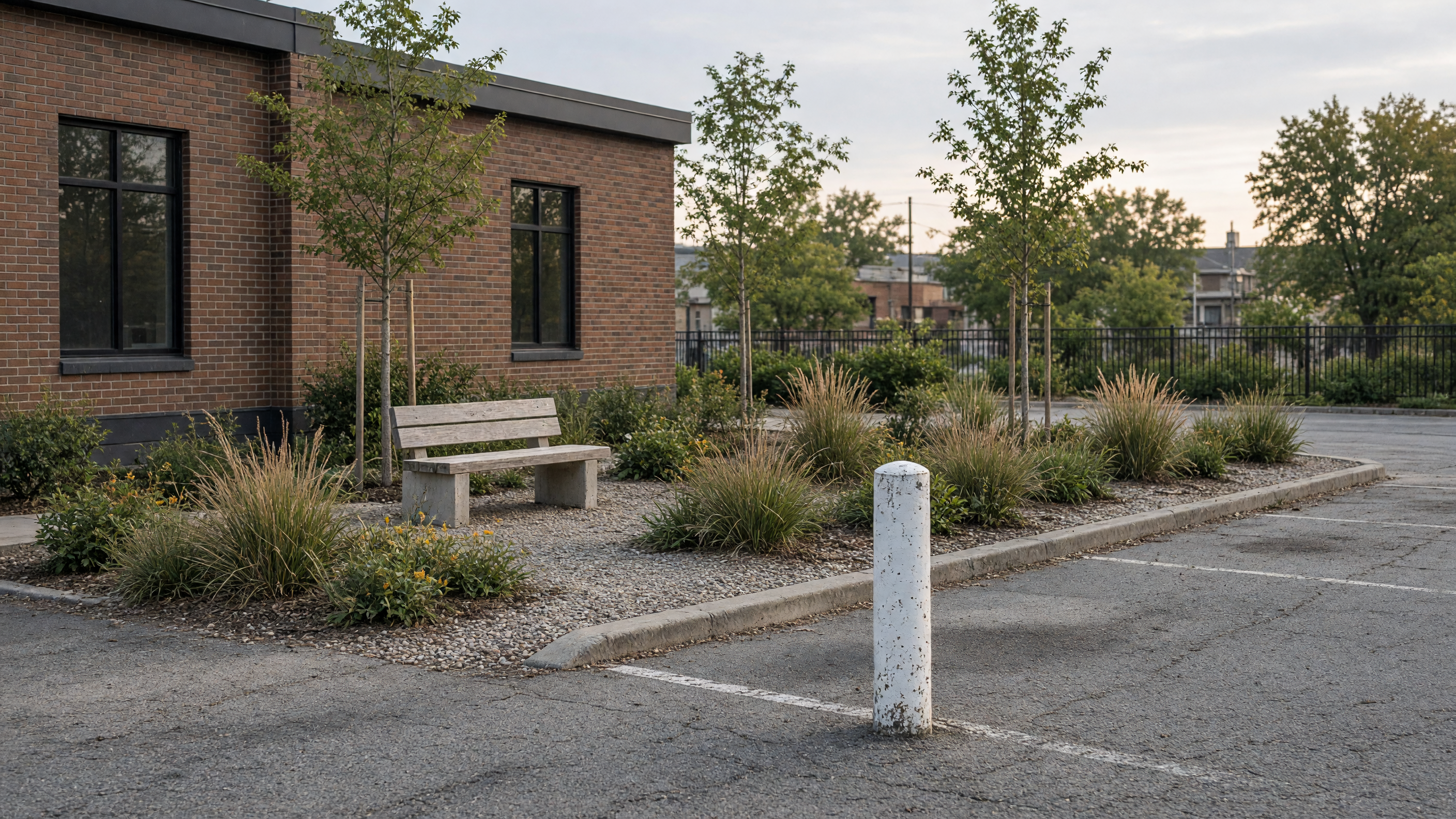
The asphalt remains visible along one side of the new park. A thin layer of concrete was poured over the old surface, thick enough to hold the weight of a small truck but thin enough to keep the work within budget. The joints were cut in straight runs that follow the former parking stripes, so the cracks that will come later already have a place to go.
Benches were set on short concrete pads poured directly on that slab. Their legs sit in steel shoes cast into the pads, so the wood can be replaced without breaking the slab again. The pads are slightly higher than the surrounding gravel, which keeps the seat dry after rain and gives the person sitting there a clear view across the remaining open ground.
A row of young maples was planted in the old wheel tracks. The soil beneath them is a mix of the original sub-base and new topsoil brought in by the truckload. Water from the adjacent roof now runs through a shallow channel cut into the concrete and reaches the tree roots before it reaches the street drain. In summer the leaves already throw a usable shadow across two of the benches by mid-afternoon.
The fence along the sidewalk is made of the same steel pipe that once held the parking-lot lights. The pipes were cut to length, straightened where they had been bent by snowplows, and set into new footings. At the gate the hinges are bolted through a plate that was part of an old sign base; the plate still carries a faint ghost of the store name that used to hang there.
People use the place at different times of day. In the morning a woman from the apartment building across the street brings her coffee and sits on the bench nearest the maples. At noon two construction workers eat lunch on the low wall that was once the curb of the drive aisle. By late afternoon the gravel area has become a place for a child to ride a bicycle in circles while a parent watches from the same bench. None of these uses required new programs or special permissions; they simply followed the places where the concrete stays dry and the shade arrives on schedule.
The lighting is minimal. One existing pole was left in place and fitted with a shielded fixture that directs light downward onto the benches. The timer is set to match the streetlights on the next block, so the park does not become a separate glowing rectangle after dark. The remaining darkness keeps the sound of traffic audible and keeps the interior temperature closer to the surrounding air.
The park occupies less than half the original lot. The rest remains available for overflow parking during large deliveries at the corner store. That arrangement was written into the permit so the city would not have to defend the change if the store later claims a loss of loading space. The concrete joint that marks the edge between park and parking runs straight across the lot and gives both sides a clean place to stop.