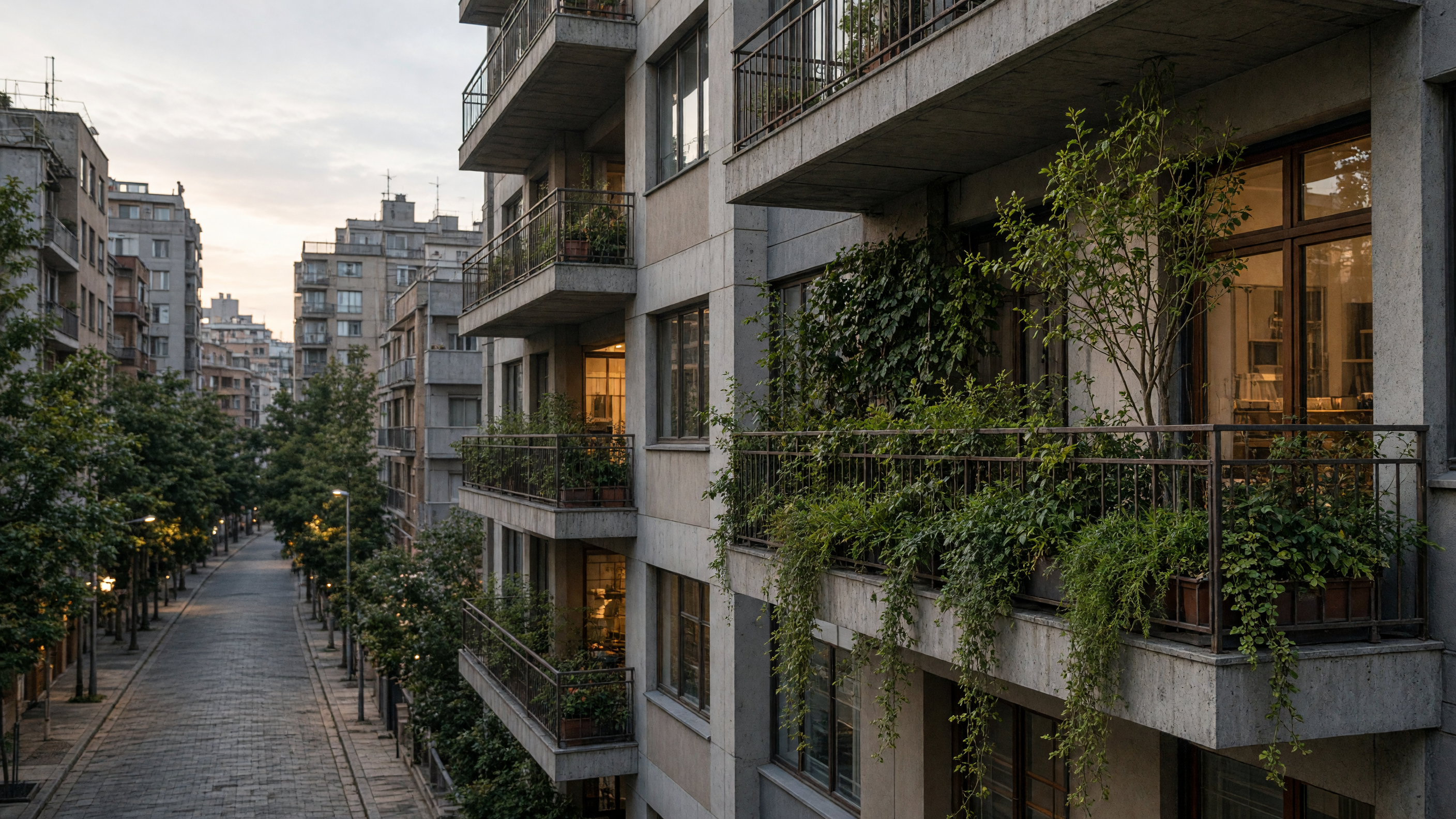
A concrete parapet two bricks thick holds the morning sun until late in the day. On the south side of the block the heat stays in that mass and radiates inward after sunset, so residents keep the balcony doors closed until the air cools. A row of terracotta pots set against the inner face of the parapet changes the balance. The soil and the clay absorb some of the stored heat, and the leaves above them cast a shifting pattern across the floor.
The pots are ordinary, the kind sold at any garden center, yet their placement matters. They sit low enough that the railing still meets code, and the soil surface stays shaded for most of the afternoon. Water left in the saucers evaporates slowly through the day, adding a trace of humidity that tempers the dry air that rises from the street. On still evenings the effect is small but measurable: a thermometer set at seating height reads two degrees cooler than one placed against the outer wall.
Residents treat the balcony as an extension of the kitchen rather than a display. Herbs in square boxes line the inner rail, their scent drifting inside when the door is open. A single dwarf citrus in a half-barrel occupies the corner where the afternoon light lingers longest. The tree needs little water once established, and its canopy breaks the low western sun before it reaches the living-room glass. On weekends the same space holds a folding table and two chairs; the leaves provide enough shade that meals can continue past the hottest hour.
The building itself is a five-story walk-up from the 1920s, its façade punctuated by shallow balconies no more than four feet deep. The original iron railings remain, now supplemented by a simple timber screen on the lower half. The screen is made of vertical slats spaced to let air pass while blocking the view from the sidewalk. Inside the apartment the lowered sight line keeps the room private, yet the upper rail stays open so that breezes can cross the space without obstruction.
Maintenance falls to individual households. One tenant waters every third evening with a hose run from the kitchen sink. Another has fitted a drip line from a five-gallon bucket set on a shelf above the pots; gravity does the work while the occupant is at work. Overflow drains through a scupper cut into the original concrete lip, feeding a narrow strip of ground cover at street level. The superintendent replaces failed plants once a year and sweeps the leaves into the compost bin kept in the rear yard.
Over several summers the pattern repeats across the block. Where balconies remain bare the interior rooms stay warmer after dark, and residents rely more on fans and closed blinds. Where the pots accumulate, the difference is felt first at shoulder height, then in the lower rooms once the doors are opened for the night. The change is incremental and local, measured one railing at a time rather than by citywide averages.