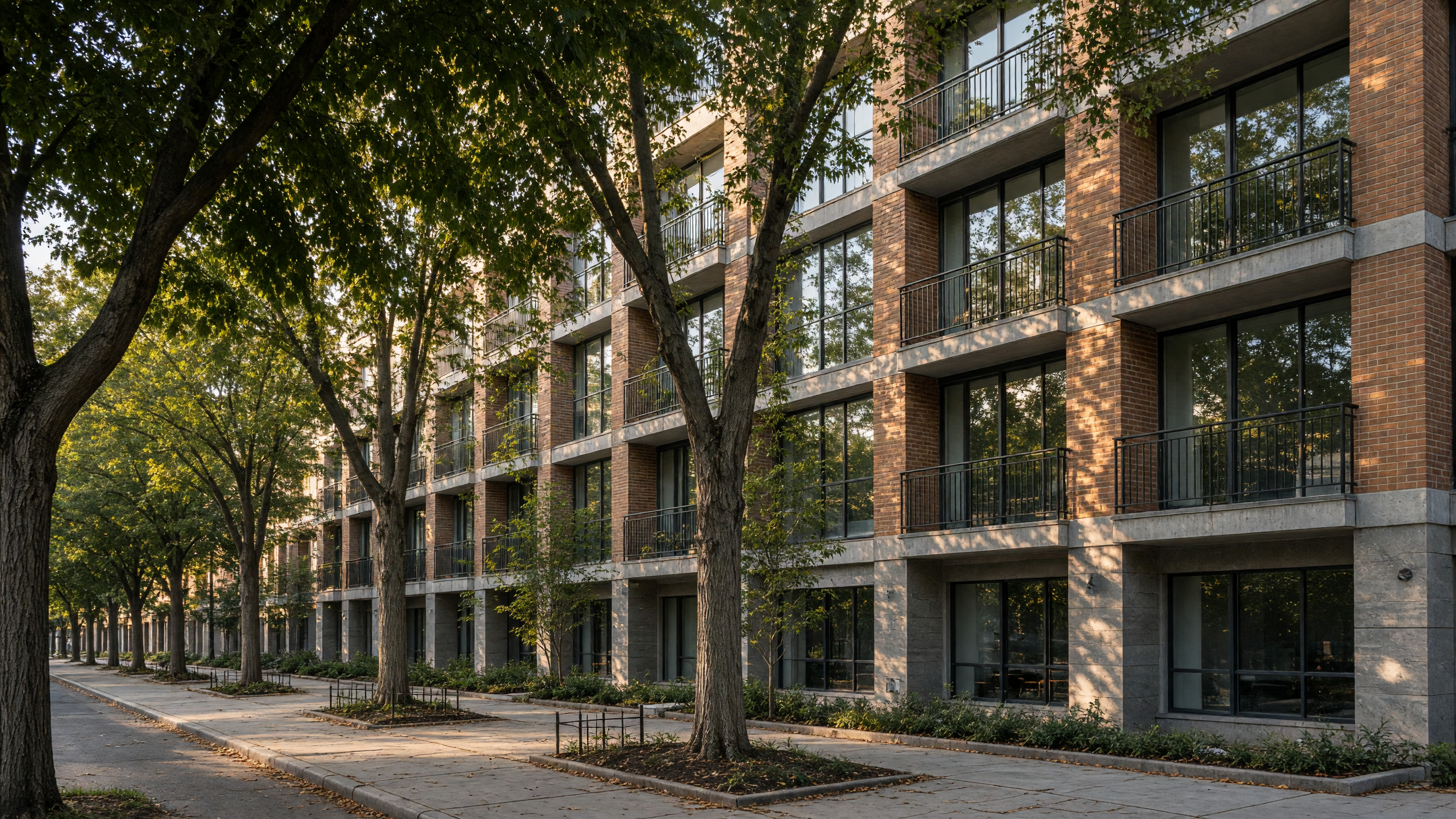
A row of maples stands ten feet from the south windows of a four-story walk-up. In summer their crowns reach the third floor, and the rooms behind them stay ten degrees cooler than the identical units across the street that face open pavement. The difference shows on the utility bills and on the tenants’ habits: the south-facing apartments keep their blinds open all day, while the north-facing ones stay half-drawn against glare.
The trees are not a gesture. Their trunks are set in grated pits that allow root spread, and the soil volume beneath the sidewalk is continuous for thirty feet in each direction. A two-foot-wide concrete band next to the curb carries the weight of delivery trucks; the rest of the pavement is open enough for air and water. The species was chosen for a narrow crown and a high branch structure that clears the second-floor sills, so daylight still reaches the lower windows in winter when the leaves are gone.
Inside, the light changes by the hour. At ten in the morning the branches cast a moving pattern across the living-room floor. By mid-afternoon the canopy has thickened and the room is evenly shaded. Tenants learn to move a chair into the remaining bright patch rather than draw a curtain. The effect is local; two blocks away, where the same building type faces a parking lot, the afternoon sun hits the glass directly and the air-conditioning units run steadily.
The trees also change the sound inside the apartments. Traffic noise from the avenue is softer because the leaves absorb some of the high frequencies. In winter the bare branches let more sound through, but the difference is small enough that residents notice it mainly when the leaves return. The building itself has double-hung windows with simple exterior blinds; no additional shading devices were added because the trees already cut the peak load.
Maintenance falls to the city forestry crew and to the building superintendent. The crew prunes every three years to keep clearance above the sidewalk and to remove deadwood before storms. The superintendent sweeps the fallen leaves from the areaways and checks that the tree grates have not lifted. When a tree dies it is replaced within the same season so the shading pattern is not lost for long. Tenants accept the seasonal litter because the cooling benefit is immediate and measurable.
The arrangement works only when the street section is wide enough for both sidewalk and planting strip. On narrower streets the same building would over-shade its own ground floor, and the loss of winter sun would outweigh the summer gain. In this block the geometry fits, and the result is a room that stays comfortable without mechanical help for most of the cooling season.