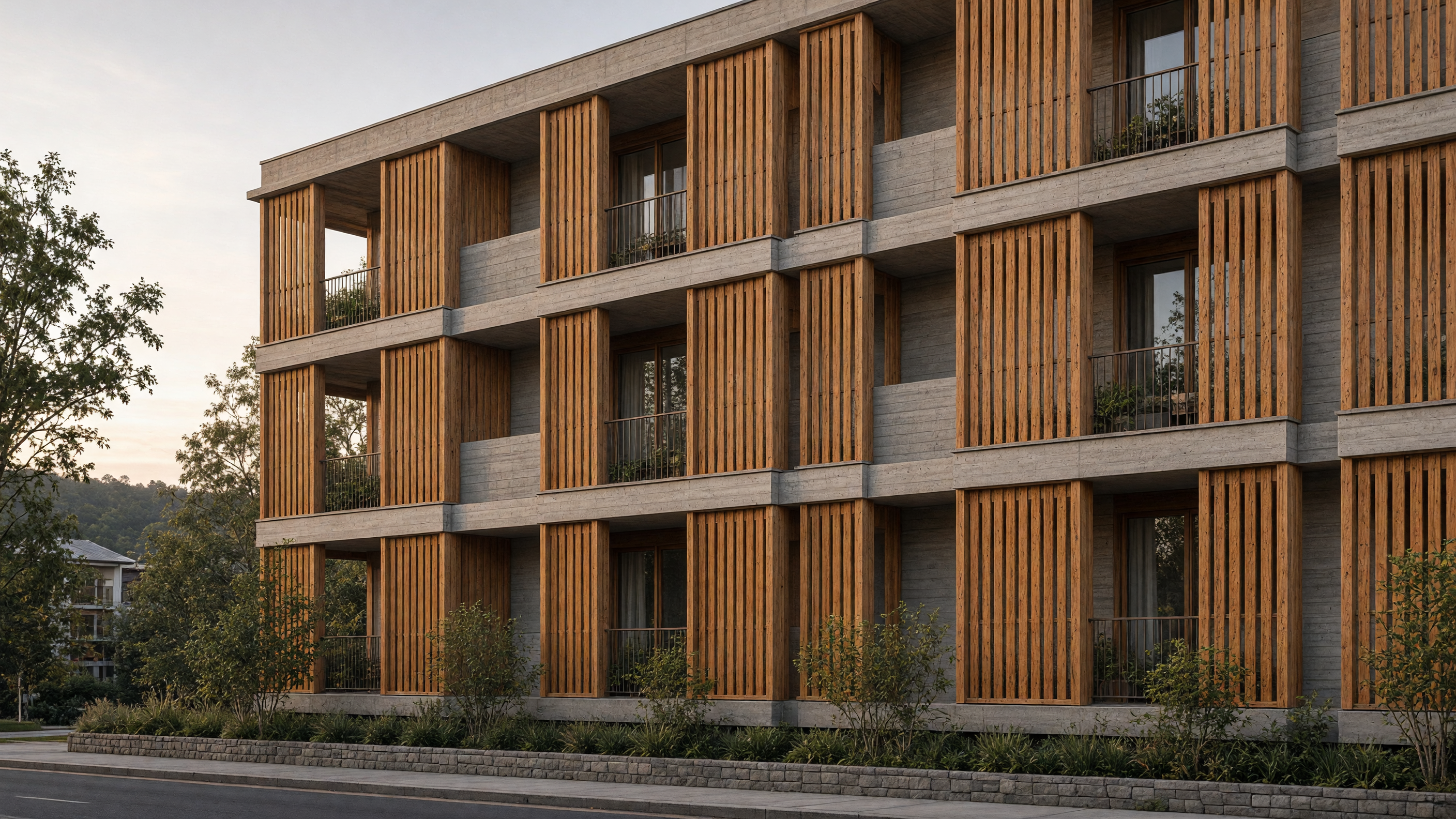
A set of vertical timber slats runs across the south face of a mid-rise apartment block, each screen mounted a hand’s width clear of the balcony edge. From the street the slats read as a single plane, yet each resident can swing their section open or closed with a single pivot. In summer the screen throws a moving stripe of shadow across the tile floor; in winter the same slats can be folded flat against the wall to let low sun reach the glass doors.
The timber is western red cedar, left unfinished so that rain and sun work on it together. Within a season the surface turns silver-gray, the color uniform enough that the eye stops noticing the joints between boards. The grain remains visible, however, and the slight cup that develops in each slat gives the screen a faint texture against the flat stucco of the building behind it. No finish means no maintenance schedule; the wood is simply replaced when a tenant wants a new tone or when a board splits.
Inside the apartment the screen changes the way light moves across the room. Morning sun still reaches the far wall, but the slats break the beam into narrow bands that shift as the day lengthens. A person sitting at the table sees the pattern on the opposite wall before feeling the warmth on skin. The effect is enough to keep the blinds open through most of the cooling season, reducing the hours the air conditioner runs.
The balcony itself stays usable in warm months. The screen blocks direct view from the street yet leaves a generous slice of sky and the tops of nearby trees. A chair placed against the rail receives filtered light; a table set farther back stays mostly shaded. Because the slats stop short of the ceiling, warm air can still rise and leave the space rather than pool against the glass.
Construction is simple. Each screen is a ladder frame of 2-by-3 cedar, with horizontal rails at top and bottom and a middle rail for stiffness. The slats are screwed to the frame from behind so no fasteners show on the street side. The whole panel hangs from a pair of stainless-steel pintles set into the concrete edge beam; a single latch at the opposite end holds it closed. When a tenant moves out, the screen lifts off its pins in minutes and travels with them or goes into storage.
The choice of wood over perforated metal or fabric keeps the balcony surface cooler underfoot. Timber does not store heat the way metal does, and the open joints allow a trickle of air to pass between screen and rail. On still afternoons the difference is small but measurable: the tile under the screen stays a degree or two below the temperature of the exposed deck beyond the shadow line.