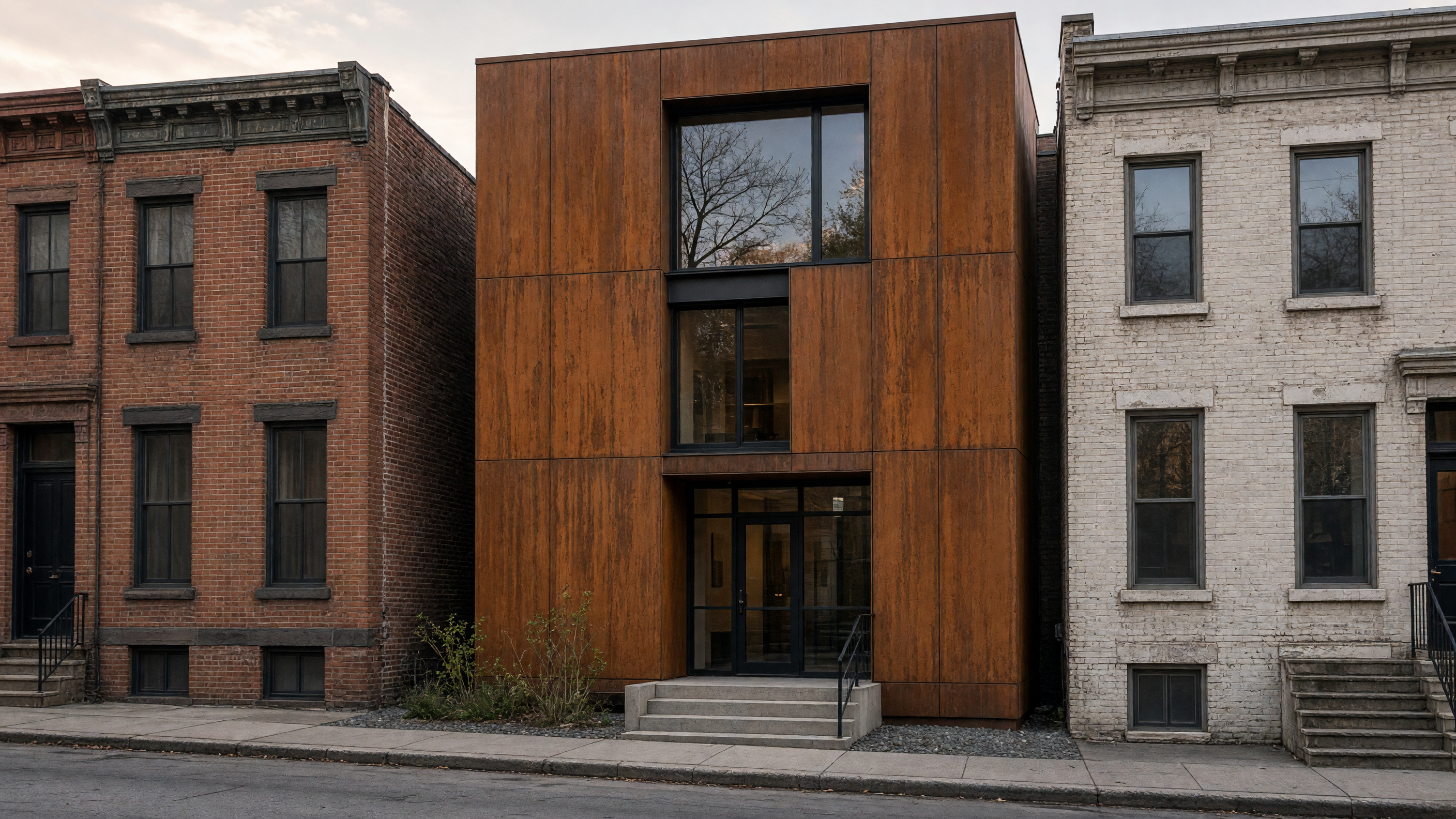
The first time a new Corten panel is lifted into place on a Baltimore rowhouse, it still shows the bright mill scale from the rolling mill. Two days later the surface begins to stipple with orange freckles, and by the end of the month the color has settled into a dense, even brown that matches the iron spot bricks two doors down.
The new skin sits two inches forward of the old masonry. That gap holds a continuous layer of rigid mineral board that meets the existing joist ends without cutting them. Because the steel is fastened only at the top and bottom rails, the original window openings keep their exact width and the interior plaster returns remain untouched. The added depth also creates a narrow pocket at the ceiling line, large enough for a new duct that supplies fresh air to the upper floors without disturbing the parlor cornice.
At the rear, the steel wraps a small hyphen that projects four feet into the yard. Inside that hyphen a steel stair rises against the new wall, its treads welded directly to the inner face so the stringers disappear. On summer evenings the steel surface facing the yard radiates the heat it absorbed during the day; the bedroom above stays comfortable with the window cracked and the door to the landing left open. In winter the same mass delays the drop in temperature after the thermostat is lowered at night.
The front elevation keeps the original sandstone sill and lintel. Where the Corten meets these stones, a thin strip of lead-coated copper flashes the joint and prevents the rust wash from staining the lighter masonry. The new entrance door is set in a steel frame whose stop is welded from the same plate stock, so the shadow line around the opening matches the panel seams above. Residents notice that voices from the sidewalk no longer carry as clearly into the front room; the added mass and the air gap behind the steel reduce the flanking path that used to travel through the old brick.
Maintenance stays limited to an annual rinse with a garden hose. The oxide layer continues to tighten for roughly ten years, after which the surface color changes only with the angle of the light and the presence of the ivy that has begun to climb the adjacent party wall. By then the owner has added a single bench against the steel at the rear, its backrest set an inch clear so that trapped moisture can dry and the plate can continue to breathe.