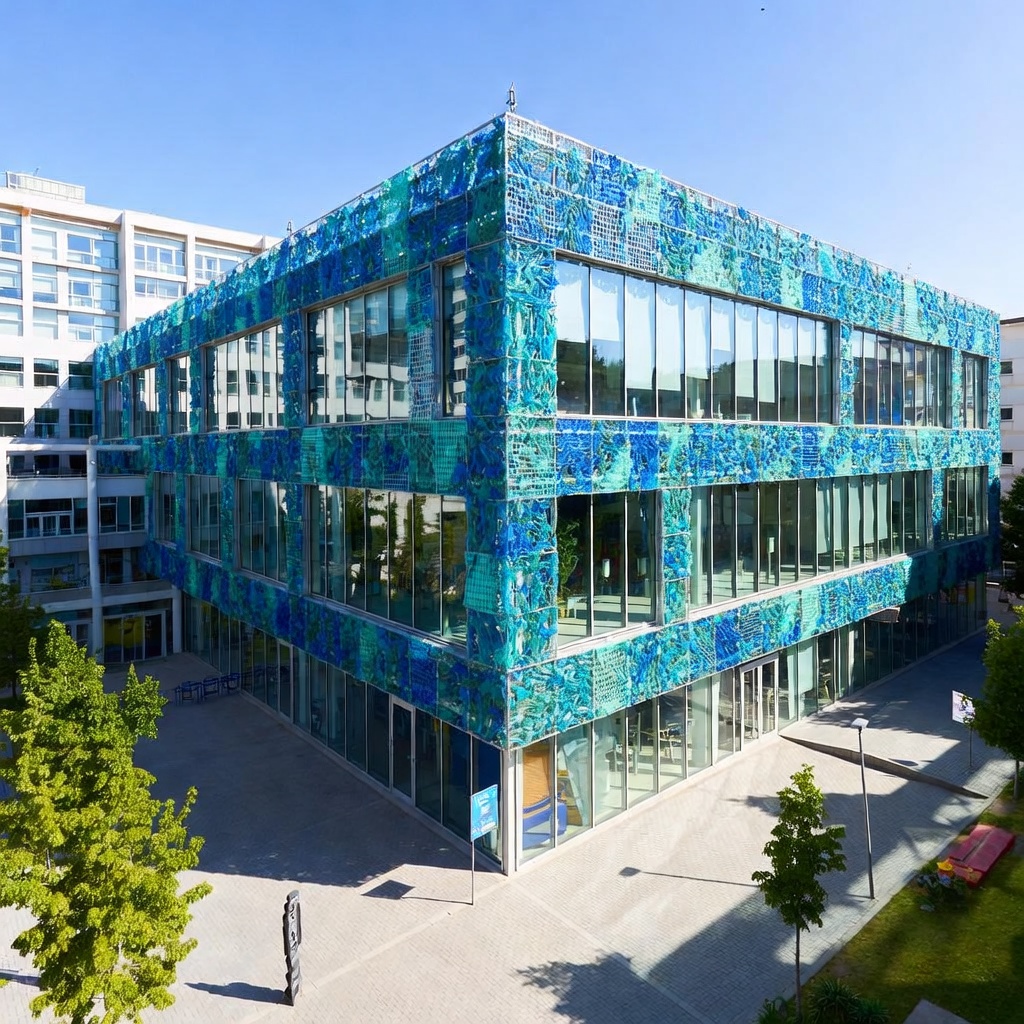
Architects are turning the tide on pollution with facades made from recycled ocean plastic, transforming debris that’s choked our seas into sleek, sustainable building skins. These innovative exteriors aren’t just eye candy—they’re a smart fusion of environmental rescue and cutting-edge design, proving that trash can become treasure.
At their core, recycled ocean plastic facades repurpose polyethylene terephthalate (PET) bottles and high-density polyethylene (HDPE) nets fished from gyres like the Great Pacific Garbage Patch. The process starts with collection by organizations such as The Ocean Cleanup or local beach cleanups, followed by sorting, shredding, and melting into uniform pellets. These are then extruded or molded into cladding panels, tiles, or louvers with properties rivaling virgin materials: UV resistance for longevity, low thermal conductivity for energy efficiency, and fire-retardant additives for safety. Unlike traditional facades, they’re lightweight—slashing installation costs and structural demands—while offering customizable textures from matte weaves mimicking ocean waves to glossy finishes echoing sea glass. Brands like Bureo and Oceanworks have pioneered boards from ghost nets, boasting 10x the strength of wood without the deforestation.
This isn’t a futuristic pipe dream; it’s rooted in necessity with roots tracing to the 2010s. Early adopters like the 2015 Ocean Plastic Pavilion at Milan Expo showcased modular walls from 25,000 recycled bottles, signaling a shift. Fast-forward to today: Madrid’s El Ateneo restaurant sports a shimmering facade from 7 tons of beach plastic, harvested via Parley for the Oceans. In the U.S., the Nike House of Innovation in Los Angeles features panels from 200,000 bottles, blending aesthetics with acoustics to dampen urban noise. Singapore’s green building codes now incentivize such materials, with projects like the Ocean Plastic Pavilion at Gardens by the Bay demonstrating scalability. Even luxury enters the fray—Versace’s Sea Secret Collection uses upcycled nylon from fishing gear for high-end veneers.
Why does this matter now? Oceans absorb 11 million metric tons of plastic yearly, fragmenting into microplastics that infiltrate food chains and human blood. Facades from recycled plastic divert waste from landfills, cutting virgin production’s 99 million tons of annual CO2 emissions. Economically, it’s a boon: the global recycled plastics market hits $50 billion, creating jobs in coastal communities hit hardest by marine litter. Aesthetically, these facades add narrative depth to buildings, turning structures into storytellers of resilience. Challenges remain—scaling collection and ensuring purity—but innovations like AI-sorted recycling plants are closing gaps.
As climate deadlines loom, ocean plastic facades aren’t optional flair; they’re a blueprint for circular architecture. They remind us that design can detoxify our planet, one panel at a time. Dive in—our coasts depend on it.
Comments are closed