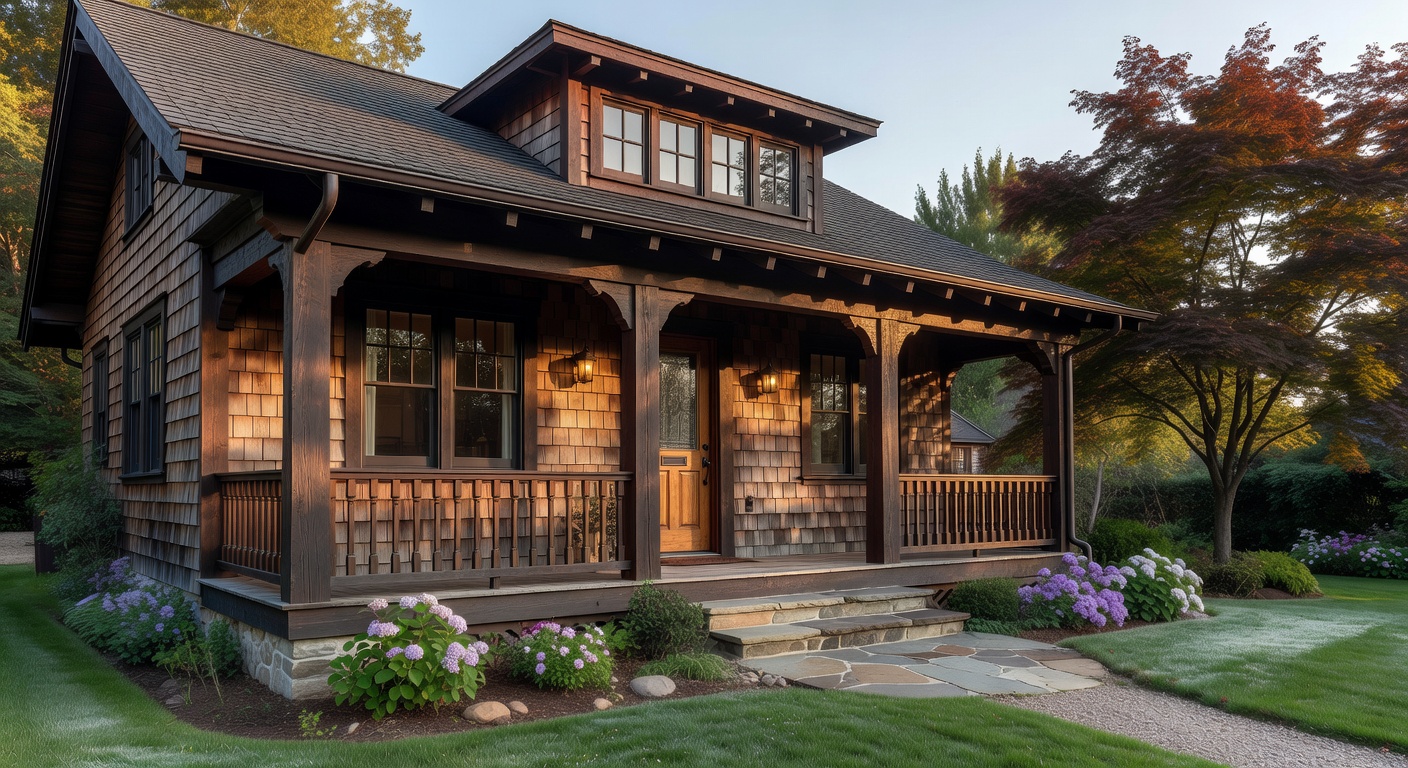
The Craftsman bungalow stands as a testament to an era when homes were built by hand, with soul. Emerging in the early 1900s amid America’s industrial boom, this architectural style rejected the ornate excess of Victorian excess for honest, functional beauty. Picture low-slung roofs and welcoming porches that seem to invite neighbors for a spell—these aren’t just houses; they’re stories carved in wood and stone.
At its core, the Craftsman bungalow boasts distinctive features that define its enduring appeal. Wide, overhanging eaves shelter deep front porches, often supported by sturdy, tapered columns resting on broad stone bases. These porches aren’t afterthoughts; they’re the home’s heartbeat, designed for everyday living. Inside, exposed roof beams and rafters showcase the craftsmanship, while built-in cabinetry, benches, and fireplaces integrate seamlessly with the space. Bungalows favor natural materials—shakes or wood siding on the exterior, oak or fir trim indoors—stained to highlight the grain rather than painted over. Windows, typically double-hung or casement with divided lights, flood rooms with light and frame views like artwork. Kitchens and baths, though compact by today’s standards, feature efficient layouts with original tiled counters and brass fixtures.
Historically, the Craftsman movement arose from the Arts and Crafts ethos, championed by figures like Gustav Stickley and the Greene brothers in California. Popularized through pattern books and kits from Sears, Roebuck, these homes democratized quality design for the growing middle class. From Pasadena’s Gamble House—a Greene & Greene masterpiece with intricate joinery and art glass—to humble neighborhoods in Chicago and Seattle, bungalows symbolized a backlash against mass-produced goods, emphasizing handmade integrity amid rapid urbanization.
Today, Craftsman details thrive in modern revivals and renovations. Architects like Steve Reed incorporate bungalow hallmarks into new builds, blending them with sustainable tech like solar panels hidden under gabled roofs. In Pasadena’s Bungalow Heaven, owners restore original elements while adding energy-efficient windows that mimic the classic grid patterns. These homes matter now more than ever: in a world of cookie-cutter McMansions, Craftsman’s human scale fosters community—porches encourage interaction, compact footprints reduce waste. They embody sustainability before it was trendy, using local materials and passive cooling via those deep eaves.
What draws us back? It’s the tactility—the smooth hand-planed wood, the weight of a solid door, the play of light on beveled glass. Owning or admiring a Craftsman bungalow reconnects us to skilled labor and thoughtful living. Whether touring historic districts or eyeing a fixer-upper, these homes remind us that beauty lies in simplicity, durability, and details that whisper of care. In an age of fleeting trends, the bungalow endures, a quiet revolution one porch at a time.
Comments are closed