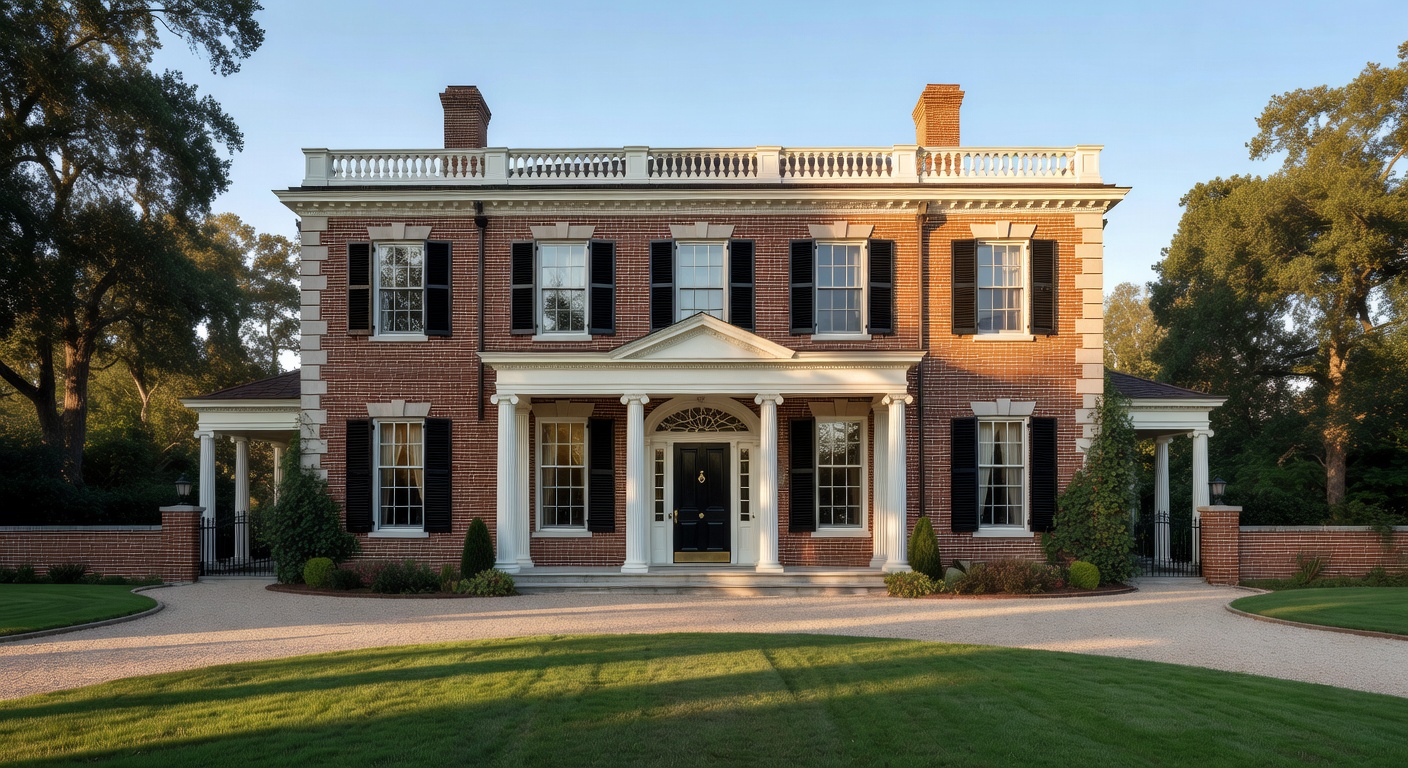
Federal style elegance captures the poised sophistication of a young nation stepping into maturity, blending neoclassical grandeur with everyday grace. Emerging in the late 18th century, this architectural and decorative movement defined the early United States, reflecting the optimism of a republic born from revolution. Unlike the ornate excess of preceding Georgian styles, Federal design emphasized symmetry, proportion, and restraint—hallmarks of democratic ideals translated into built form.
At its core, Federal style draws heavily from ancient Roman and Greek architecture, filtered through the Enlightenment lens of architects like Thomas Jefferson and William Thornton. Key features include balanced facades with evenly spaced windows and central entrances, often framed by delicate fanlights or elliptical arches. Inside, rooms boast high ceilings, ornate cornices, and plasterwork medallions inspired by Roman motifs like swags, urns, and eagles—symbols of liberty and strength. Furniture echoes this with slender, tapering legs on chairs and tables, inlaid woods, and bell-shaped motifs, crafted by masters like Duncan Phyfe. Colors lean toward soft pastels and whites, creating airy, light-filled spaces that evoke openness rather than opulence.
Historically, Federal style flourished from 1780 to 1820, coinciding with the ratification of the Constitution and the presidencies of Washington and Adams. Iconic examples include the White House, designed by James Hoban in 1792 with its iconic portico and semi-circular entrance, and the U.S. Capitol’s early wings by Thornton. In Boston, Charles Bulfinch’s Massachusetts State House (1798) showcases a golden dome atop red brick symmetry, while Philadelphia’s mansions like the Powel House hosted revolutionary leaders amid refined interiors. This style wasn’t just aesthetic; it symbolized national unity, with builders using motifs from Asher Benjamin’s pattern books to standardize elegance across states, from New England ship captains’ homes to Southern plantations.
Today, Federal style endures in adaptive reuse and modern revivals, proving its timeless appeal. Historic districts in Georgetown or Beacon Hill preserve original gems, while architects like Robert A.M. Stern incorporate Federal elements into luxury residences—think slim columns and pediments on contemporary townhouses in Brooklyn or Charleston. Interior designers revive it with reproduction wallpapers from Adelphi Paper Hangings, pairing Hepplewhite sideboards with sleek appliances for “heritage modern” kitchens. High-end brands like Baker Furniture offer updated Federal pieces, blending mahogany with clean lines for urban lofts.
Why does it matter now? In an era of maximalist trends and fleeting fads, Federal elegance offers enduring lessons in thoughtful minimalism. It prioritizes harmony over excess, fostering calm amid chaos—perfect for mindfulness-driven living. Environmentally, its durable materials like brick and hardwood align with sustainable retrofits, reducing the need for new builds. Culturally, it reminds us of America’s foundational poise: confident, measured, aspirational. Embracing Federal style isn’t nostalgia; it’s a blueprint for refined living that bridges past innovation with future grace, inviting us to build spaces as principled as the republic they adorned.
(Word count: 452)
Comments are closed