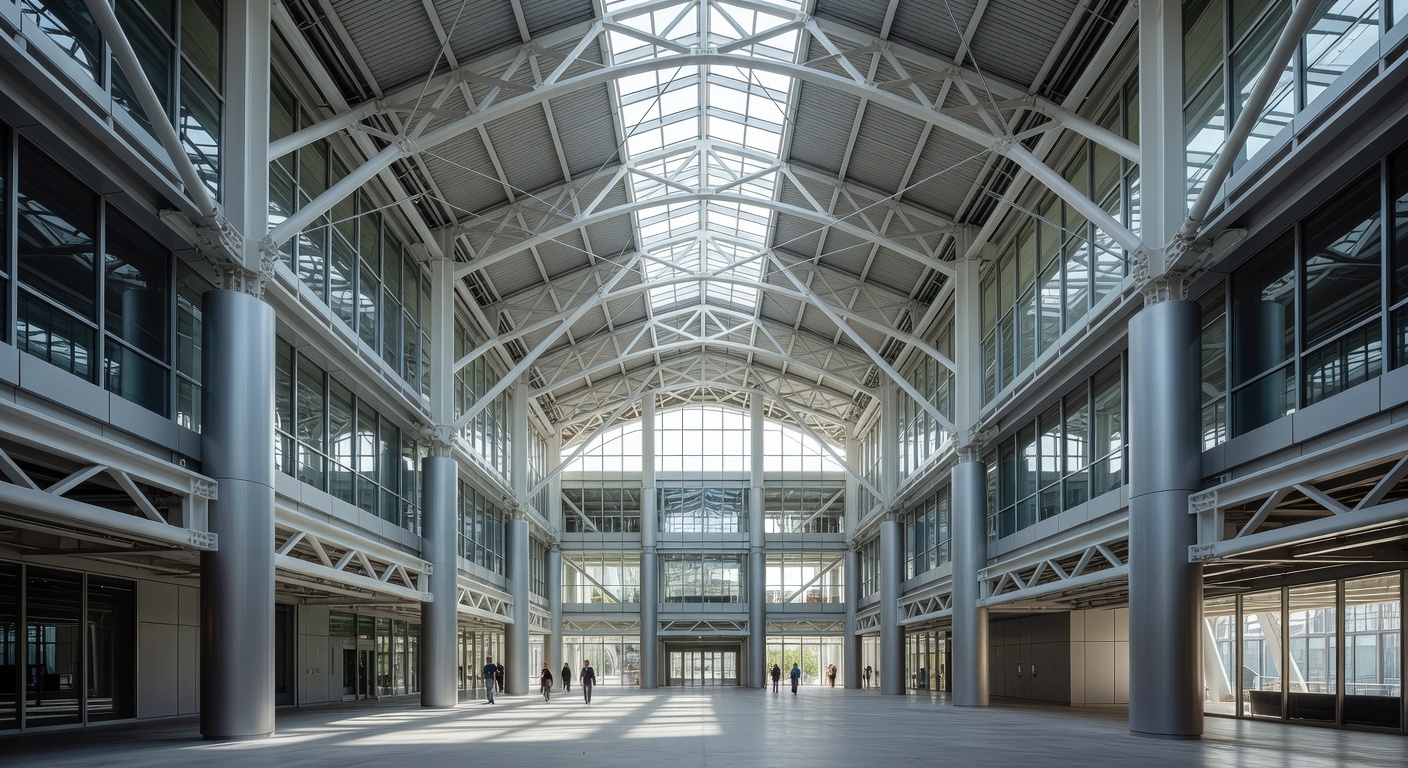
Norman Foster’s architecture doesn’t just build structures; it composes bold statements in glass and steel, where technology flexes like a dancer’s limbs. At the heart of his high-tech expression lies a philosophy that marries engineering precision with human scale, turning buildings into living machines that breathe efficiency and elegance. This isn’t mere modernism—it’s a futuristic optimism etched in exposed rivets and gleaming facades.
High-tech architecture emerged in the 1970s as a rebellious offspring of Brutalism and modernism, championed by the likes of Foster, Richard Rogers, and Renzo Piano. Influenced by the Pompidou Center in Paris (1977), co-designed by Rogers and Piano, the style exposed the guts of a building—ducts, pipes, and structural bones—like a cyberpunk vision made real. Foster, knighted in 1990 and a Pritzker Prize winner in 1999, refined this into something more poetic. His early work with Foster + Partners (founded 1967 as Foster Associates) emphasized modularity, adaptability, and sustainability, drawing from his training at the University of Manchester and Yale. The 1978 Sainsbury Centre for Visual Arts in Norwich exemplifies this: a 300-foot-long rectangular box with massive, movable walls powered by a computer-controlled system, showcasing how tech enables flexibility without chaos.
Key features define Foster’s high-tech lexicon. Exposed structural elements create a transparent honesty, demystifying construction—think the red escalators snaking up the Pompidou’s exterior, echoed in Foster’s designs like the 30 St Mary Axe (2004), London’s Gherkin. Its diagrid exoskeleton slashes material use by 50%, curving elegantly to cut wind resistance and foster natural ventilation. Energy efficiency reigns supreme: double-skin facades, photovoltaic panels, and smart climate systems reduce carbon footprints. Inside the Hearst Tower in New York (2006), triangulated trusses from the 1928 base rise skyward, reusing 85% of the original steel—a nod to adaptive reuse amid urban density. These aren’t gimmicks; they’re functional art, where form follows not just function but future-proofing.
Fast-forward to today, and Foster’s influence pulses in icons like Apple Park (2017) in Cupertino, a 2.8 million-square-foot ring of curved glass that maximizes daylight and greenery, housing 12,000 employees in climate-controlled harmony. Or the Lusail Stadium in Qatar (2022), a convertible arena that disassembles post-World Cup, embodying circular economy principles. In a climate-crisis era, this matters profoundly. Foster’s high-tech expression champions resilience: buildings that evolve with tech advances, minimize waste, and integrate biophilia—think The Eden Project’s biomes (2001) in Cornwall, hexagonal ETFE cushions enclosing lush ecosystems.
Why does it resonate now? As cities grapple with overpopulation and emissions, Foster’s work proves architecture can be both iconic and intelligent. It democratizes sophistication, making elite engineering accessible and aspirational. In an age of AI and net-zero mandates, his legacy whispers (or shouts through megastructures) that innovation isn’t optional—it’s the blueprint for survival. Foster, at 88, continues shaping skylines, reminding us that high-tech isn’t cold futurism; it’s warm, workable tomorrow.
Comments are closed