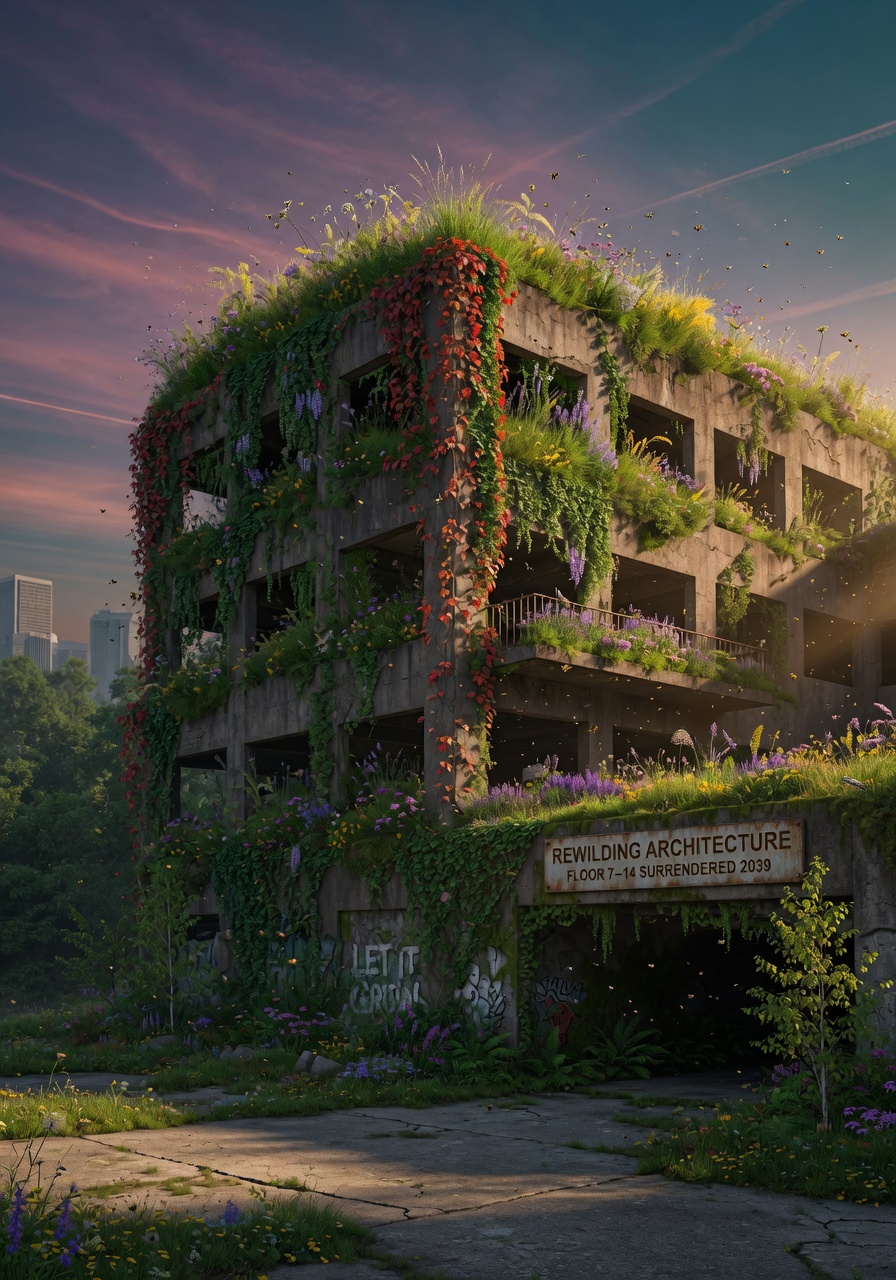
Concrete towers once stood as defiant barriers against the elements, their sharp edges and sealed surfaces pushing nature firmly to the margins. Rewilding architecture flips that script by deliberately loosening control, allowing native plants, insects, and even small animals to shape how buildings age and function over time.
The approach weaves vegetation straight into the structure itself. Vertical gardens climb facades, soil-filled ledges create planting pockets at different heights, and permeable materials let roots and water move freely. Forms often echo surrounding terrain rather than impose perfect symmetry, with built-in crevices that double as bird nests or shaded spots for pollinators. Choices lean toward local timber and mycelium-based composites that break down gradually, giving ecosystems room to shift and adapt across decades instead of freezing a single moment in time.
This thinking draws from older ways of living alongside floods and forest rhythms, though its modern version emerged in the 1990s as ecologists pushed for bigger habitat repairs. Architects began testing those ideas inside crowded cities. Milan’s Bosco Verticale, finished in 2014, packs 800 trees and 15,000 plants across two residential towers, pulling carbon from the air and lowering street temperatures nearby. In Singapore, the Supertree Grove combines solar canopies with living trunks that support rare orchids and other species. Dutch floating homes, built on recycled plastic platforms, move with the tides while oyster beds under the structures clean harbor water as part of daily life.
The shift feels especially urgent now, with cities losing wildlife faster than rural zones and climate pressures mounting. These buildings form green bridges between isolated parks, cut cooling needs by as much as 30 percent through natural evaporation, reduce flood risks during heavy rain, and ease mental strain for people who see living greenery outside their windows. Rather than treating structures as finished objects, the movement positions them as active players in restoring balance, where design choices support long-term ecological recovery instead of overriding it.
Comments are closed