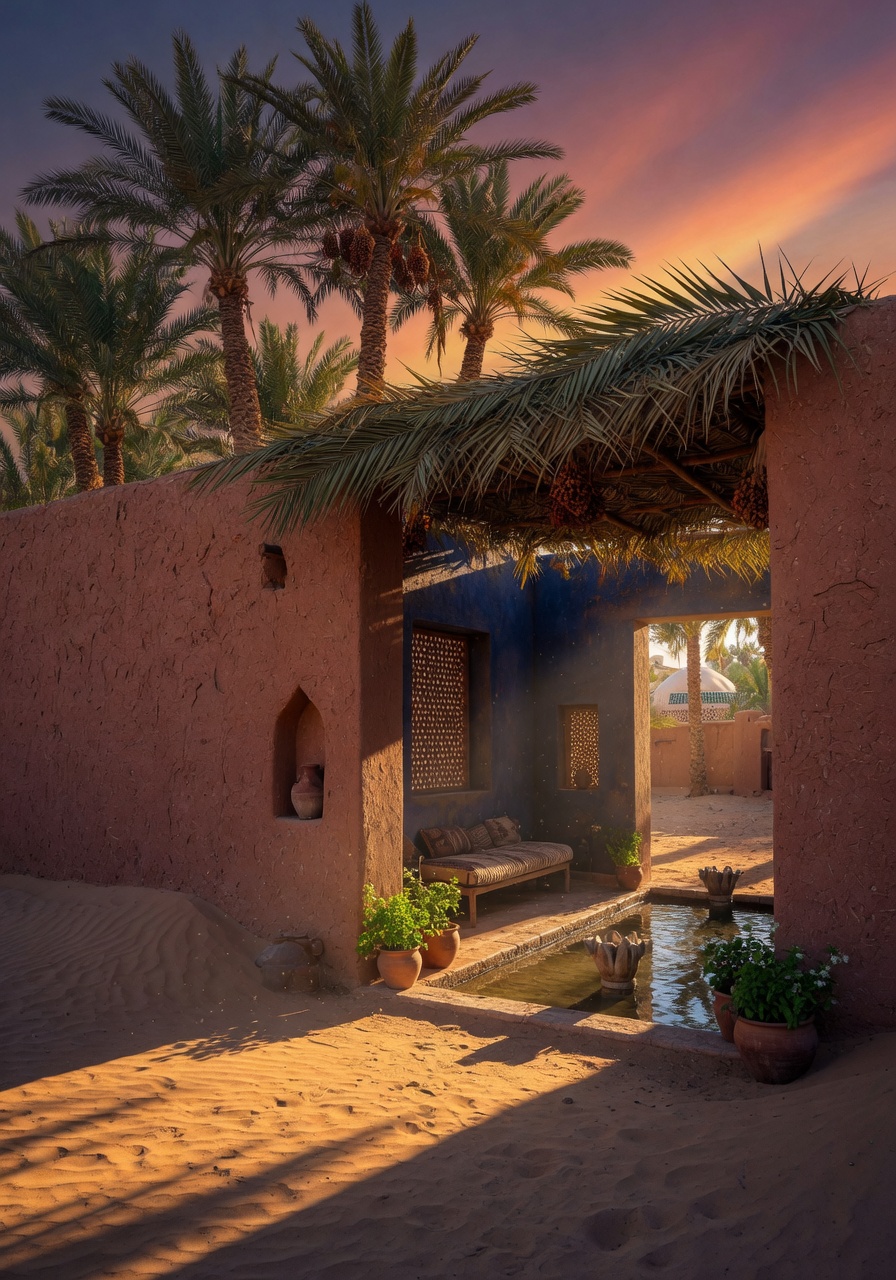
For thousands of years, people living in the driest regions on Earth developed building methods that kept them comfortable without relying on fuel or imported technology. These approaches turned extreme heat and scarce water into manageable conditions by using local resources and simple physics.
Thick walls made from mud brick or adobe absorb daytime heat and release it slowly after dark, creating natural temperature swings that feel cooler indoors. Courtyards often sit at the center of homes, where a small fountain or pool cools the air through evaporation. Wind towers, sometimes called badgirs, capture higher breezes and direct them downward to ventilate rooms. Builders chose date palm wood for beams and reeds for screens because both materials were already on hand, cutting down on transport and helping structures blend into their surroundings. Trees and shrubs were planted deliberately to block dust and cast shade while producing food.
These ideas took shape in North Africa and the Arabian Peninsula as early as the Nabataean period. At Petra, engineers carved cisterns and channels into rock to store infrequent rainfall and support trade. In Morocco’s Draa Valley, compact ksour compounds grouped houses around shared wells so water stayed protected and communities could defend themselves. Nomadic Bedouin groups later adapted tent layouts into more permanent mud buildings that still allowed for seasonal movement. Such systems supported life in areas receiving less than four inches of rain each year.
Modern projects continue to draw from the same playbook. Masdar City near Abu Dhabi uses wind towers and covered walkways modeled on traditional oasis patterns to cut energy use sharply. In Arizona, new homes incorporate bioswales and courtyard plans to reduce the heat-island effect in growing suburbs. Resorts like Amanjena in Morocco combine riad layouts with geothermal cooling, showing how older strategies can scale to larger developments.
As droughts and heatwaves become more frequent, these time-tested techniques point toward lower water consumption and reduced reliance on mechanical systems. Cities from Las Vegas to Doha now study oasis principles when planning for hotter futures, recognizing that working with natural limits can produce durable, livable environments where none seemed possible.
Comments are closed