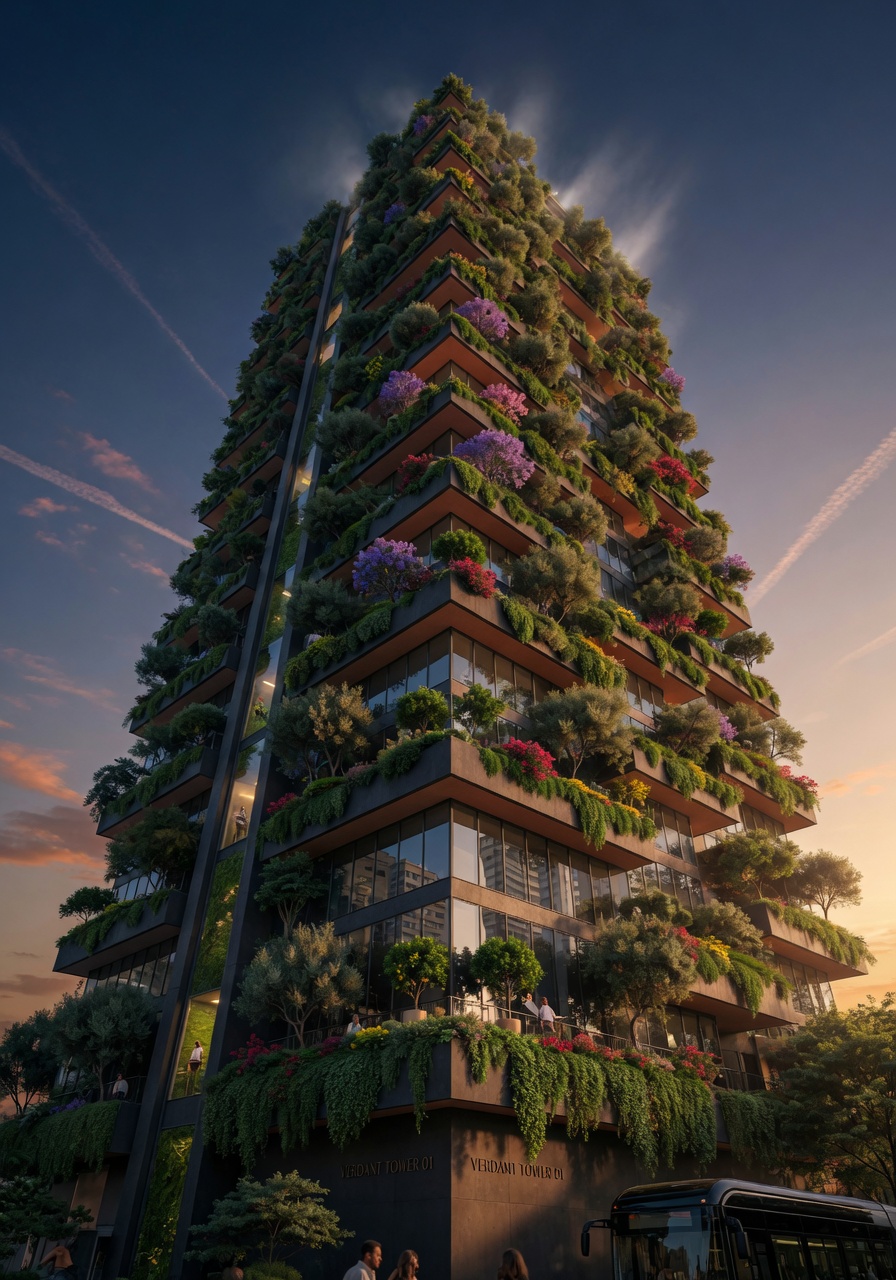
Skyscrapers clad in dense layers of foliage are quietly rewriting the rules of urban design, shifting from inert glass-and-steel monuments to active participants in the fight against pollution and rising temperatures. These vertical forests embed thousands of plants directly into their structures, with balconies engineered as deep planters that support trees stretching several meters tall. Advanced soil mixes and automated irrigation keep the vegetation stable without adding excessive weight or maintenance burdens, allowing the buildings to function as self-sustaining green machines.
Beyond their striking appearance, the systems deliver measurable environmental gains. The foliage captures carbon dioxide, filters airborne particulates, and creates natural shade that lowers surface temperatures, cutting air-conditioning demands by up to 30 percent in some climates. At the same time, the layered habitats draw birds, pollinators, and insects upward, stitching isolated towers into wider urban ecological networks rather than leaving them as sterile outliers.
The practical breakthrough arrived with Milan’s Bosco Verticale, completed in 2014 by architect Stefano Boeri. The paired towers support roughly 800 trees, 4,500 shrubs, and 15,000 smaller plants—the equivalent of two hectares of woodland dropped into a dense city block. That success triggered similar projects across Asia. Nanjing’s vertical forest towers are projected to absorb 25 tons of CO2 each year, while Singapore’s high-rises use strategic planting to moderate the city’s tropical heat and improve street-level air quality.
As urban populations swell and climate pressures intensify, these structures offer more than aesthetics. Studies consistently link daily contact with greenery to reduced stress and improved focus, benefits that matter in neighborhoods long starved of nature. Property markets have taken notice too: buildings incorporating substantial vegetation often command higher rents and resale values from tenants seeking both sustainability credentials and better daily living conditions. In an era when cities must grow without deepening their environmental footprint, vertical forests demonstrate that density and biodiversity can advance together, creating places where concrete and canopy reinforce rather than compete.
Comments are closed