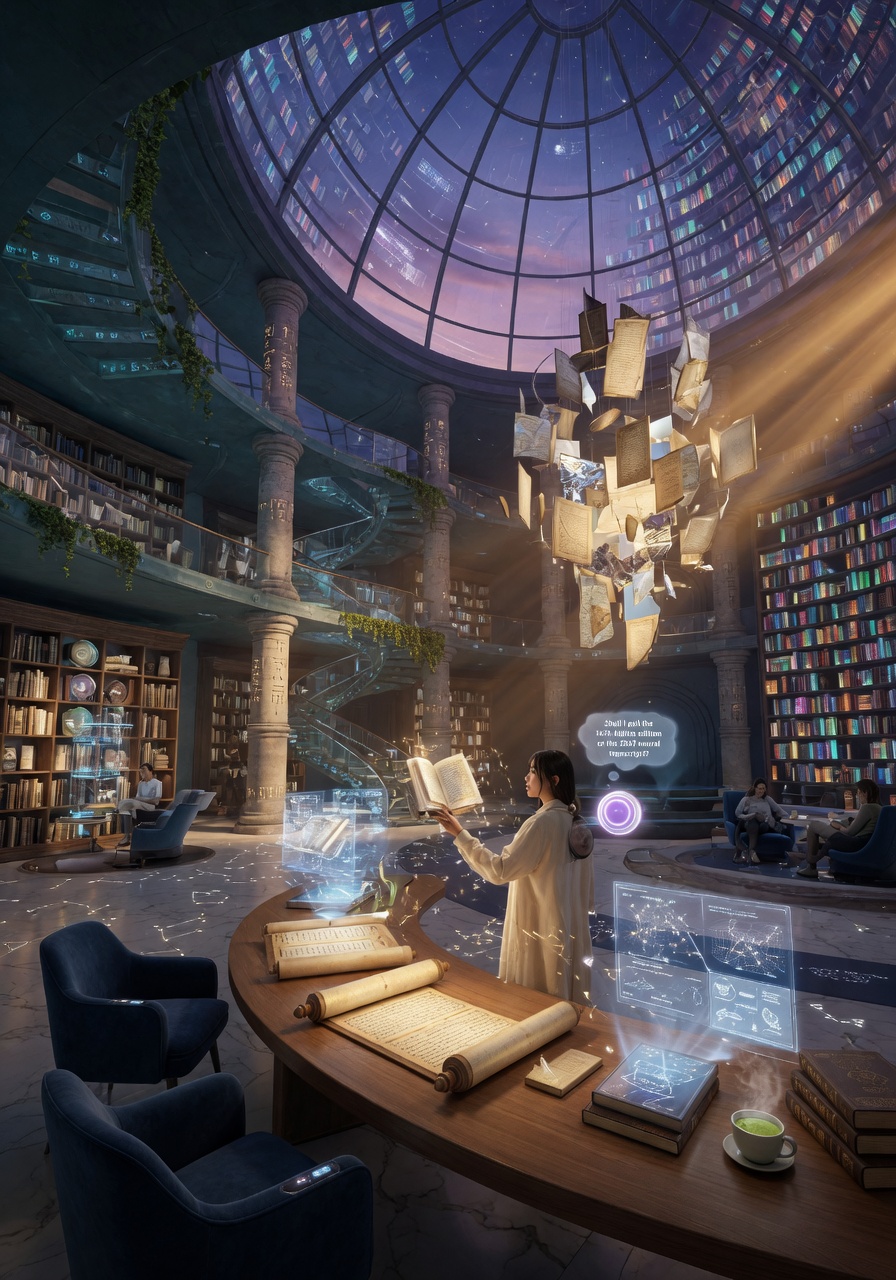
Libraries have always adapted to the rhythms of human curiosity, shifting from the scroll-lined halls of ancient Alexandria that safeguarded Greek and Egyptian insights to the public reading rooms of the 1800s that opened doors for factory workers seeking self-education. Those earlier versions focused on keeping knowledge intact and reachable, yet they bumped up against the hard limits of space and distance.
Modern examples show the change in motion. The New York Public Library now pairs its physical collections with expansive digital archives, while Singapore’s network of smart branches lets users check out e-books in the same visit where they experiment with 3D-printed objects in on-site workshops. The result feels less like a storage facility and more like a responsive hub that grows with its community.
Several practical advances are driving this shift. Artificial intelligence handles searches across enormous datasets, surfacing tailored suggestions drawn from a user’s past choices rather than generic lists. Dedicated areas equipped with virtual and augmented reality tools let people step into reconstructed historical moments or simulated environments without travel. Buildings themselves are being redesigned with green walls, natural lighting, and solar systems to cut long-term costs. At the same time, these spaces double as gathering points for coding sessions, language exchanges, and story hours that mix ages and backgrounds. Cloud-based links mean someone in a remote town can tap the same specialized databases as a researcher in a major city.
These updates address real pressures in daily life. Information comes at us from every direction, often mixed with errors or manipulation, so libraries now emphasize skills for sorting fact from noise. They also counter the pull of isolated screens by creating places where people meet in person or through hybrid events, building small bridges across different perspectives. Perhaps most critically, they protect shared records from format changes or corporate lock-ins, keeping educational resources open and reliable for whoever needs them next. As daily routines and technologies keep moving, libraries that stay flexible continue to serve as steady points of connection rather than relics of an earlier time.
Comments are closed