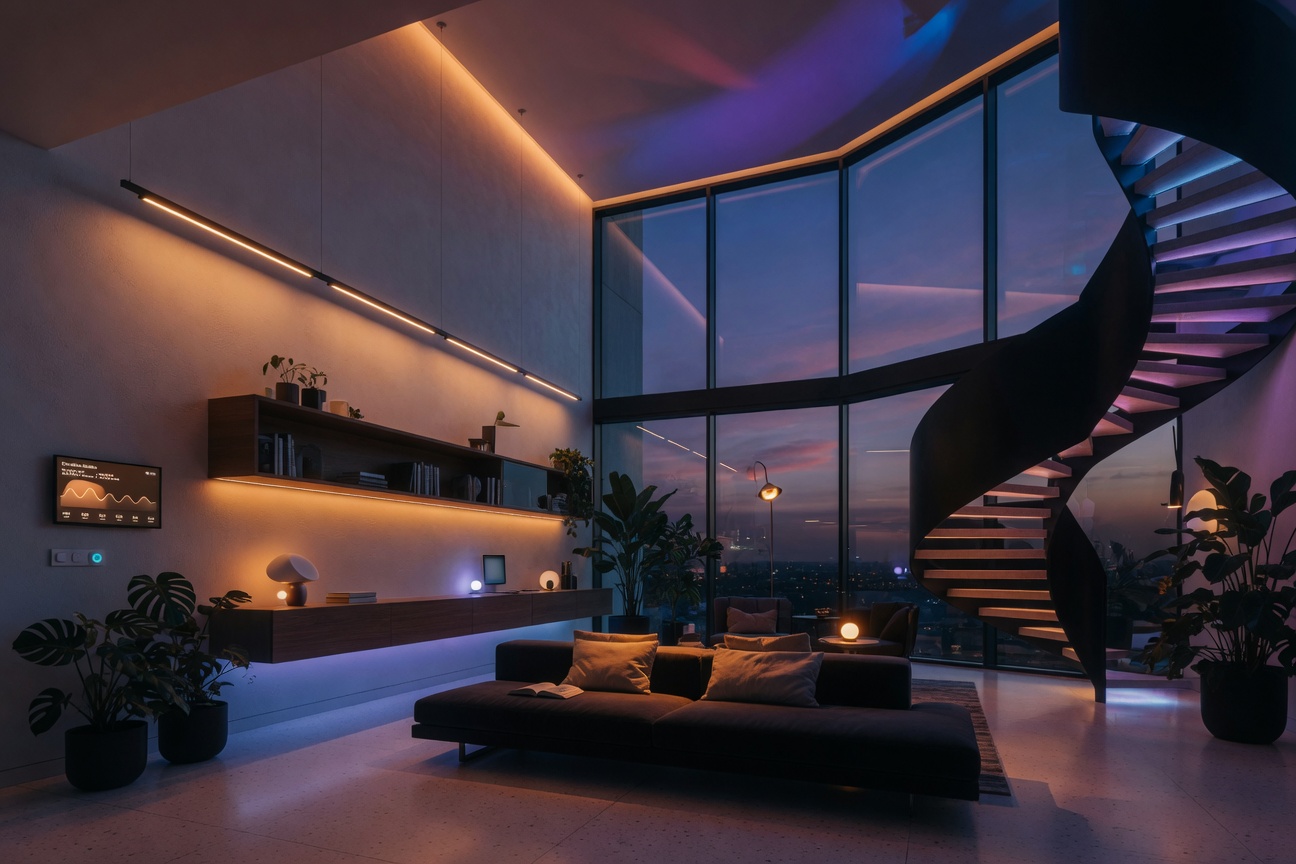
For centuries, our ancestors lived in harmony with the sun’s cycle, their bodies attuned to the gradual shift from dawn’s soft glow to the warm hues of dusk. Today, artificial lights often disrupt that ancient rhythm, leaving many of us battling fatigue or restless nights. Circadian rhythm lighting systems aim to restore balance by mimicking natural daylight patterns indoors, adjusting color temperature and intensity to align with our biological clocks. These systems typically use LED fixtures that shift from cool, blue-rich light in the morning—boosting alertness through suppressed melatonin—to warmer, amber tones by evening that encourage relaxation and sleep preparation. Research from institutions like Harvard Medical School shows that exposure to such dynamic lighting can improve sleep quality by up to 20 percent while reducing symptoms of seasonal affective disorder. In offices, for instance, tunable lights have been linked to higher productivity and fewer errors, as employees experience steadier energy levels without the afternoon slump common under static fluorescents. Hospitals benefit too, where these setups help patients recover faster by supporting natural hormone cycles disrupted by round-the-clock artificial illumination. Home versions often integrate smart controls via apps or sensors that track outdoor conditions, automatically dimming or brightening based on time of day. Yet challenges remain, including higher upfront costs and the need for precise calibration to avoid overexposure to stimulating blue light late at night. Still, as adoption grows in schools and public spaces, these technologies promise a subtle but powerful way to reclaim our innate connection to daylight without stepping outside.
Echoes of Daylight: How Modern Lighting Rewires Your Internal Clock
© 2026 Joshua Lillywhite
Comments are closed