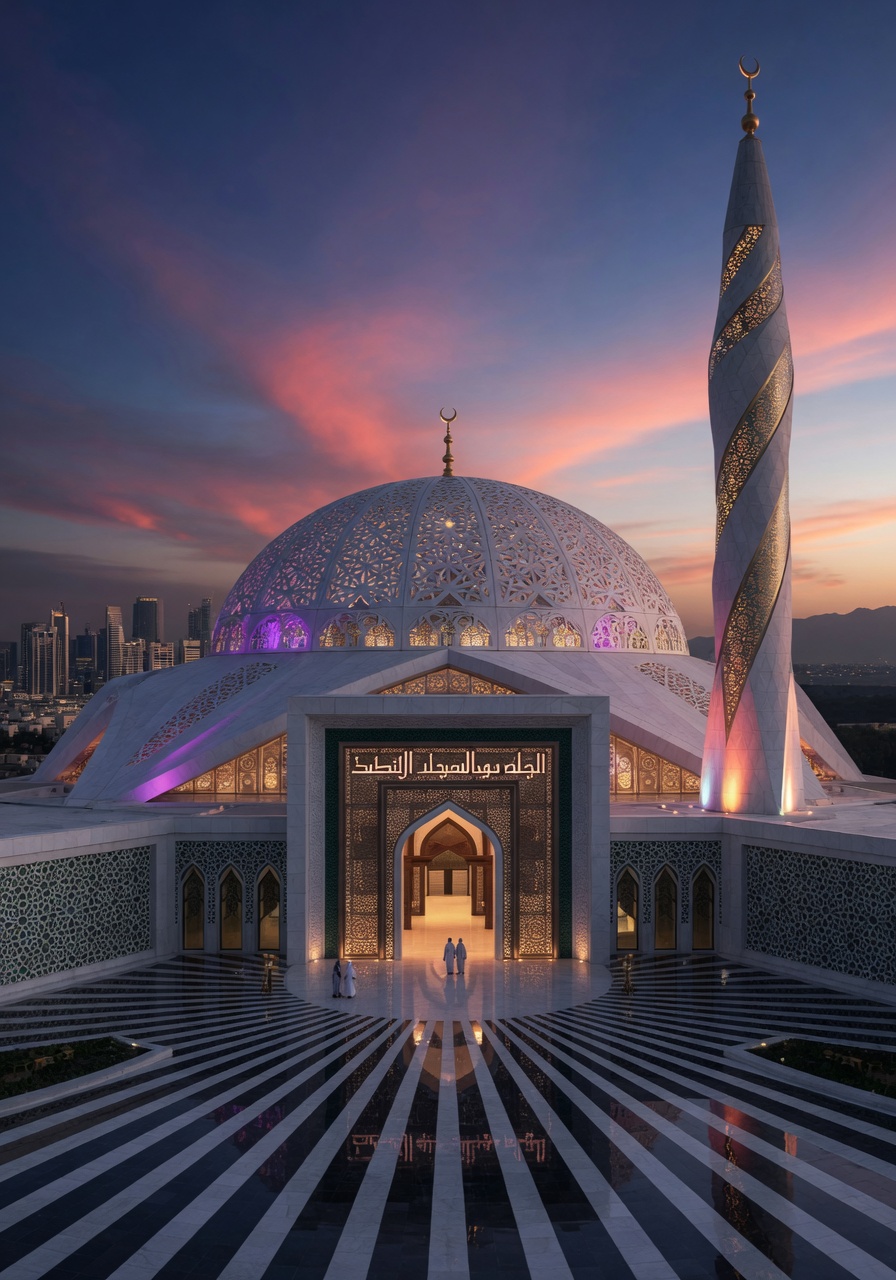
Mosques have long mirrored the societies that build them, but the latest wave of designs fuses centuries of Islamic craft with the realities of urban life and environmental limits. These buildings no longer sit apart from their cities; they absorb local rhythms while still offering quiet space for reflection.
The Sheikh Zayed Grand Mosque in Abu Dhabi, finished in 2007, shows how scale and detail can work together. Its courtyard uses 30,000 tons of white marble that bounces sunlight back into the sky, while four 348-foot minarets and a central dome catch the first light of dawn in gold. Inside, the world’s largest hand-knotted Persian carpet covers the floor, and light filters through eighty smaller domes fitted with Swarovski crystal chandeliers. Syrian architect Yousef Abdelky kept classic arabesques and muqarnas but added solar panels and rainwater systems, letting the complex welcome forty thousand people without wasting resources. The result feels rooted in older Umayyad models yet ready for today’s interfaith events and public tours.
Halfway across the world, London’s Central Mosque, completed in 2014, takes a quieter approach. Mangera Yvars Architects wrapped a crescent-shaped dome and slim minaret in red brick that echoes the Victorian warehouses around it. The building slips into the East London skyline instead of competing with it. Inside, glass walls and a flexible hall for 1,800 people make room for youth programs, women’s areas, and community meals. Green roofs and natural ventilation keep the space comfortable without heavy energy use. In a city still sorting through post-9/11 tensions, the mosque runs regular tours and keeps its doors open, quietly pushing back against old stereotypes.
Doha’s Msheireb Mosque, finished in 2011, works at a smaller scale but with equal care. Architect Basil Al Bayati revived the region’s wind towers inside a crisp geometric shell, creating shaded courtyards that stay cooler without constant air conditioning. Lattice screens turn harsh desert light into shifting geometric patterns across the prayer halls, nodding to Quranic ideas of order while serving just a thousand worshippers. Its modest footprint proves that sustainability can fit dense, fast-growing neighborhoods.
Taken together, these projects show how mosques continue to adapt. They borrow from tradition yet meet urgent needs for lower emissions and better community ties. In cities facing both climate pressure and social division, they offer working examples of how faith can shape spaces that are practical, welcoming, and still unmistakably sacred.
Comments are closed