Frank Lloyd Wright approached buildings as living extensions of their surroundings rather than objects dropped onto a plot. Born in 1867 during America’s industrial boom, he developed organic architecture around the idea that a structure should grow from its site the way a tree roots into soil. This stood in sharp contrast to the boxy forms and imported styles dominating cities at the time, where rapid expansion often ignored local character and climate.
The approach rested on a few straightforward principles. Wright insisted every project belong to its place, selecting materials that already existed nearby—limestone from nearby quarries, for instance—and shaping roofs and walls to follow the land’s natural lines rather than fight them. He stripped away applied decoration, letting the way a material aged or caught light provide the visual interest instead. Large windows and flowing interior spaces blurred the line between inside and outside, while patterns drawn from nature, such as branching motifs in brick or glass, added subtle rhythm without feeling tacked on.
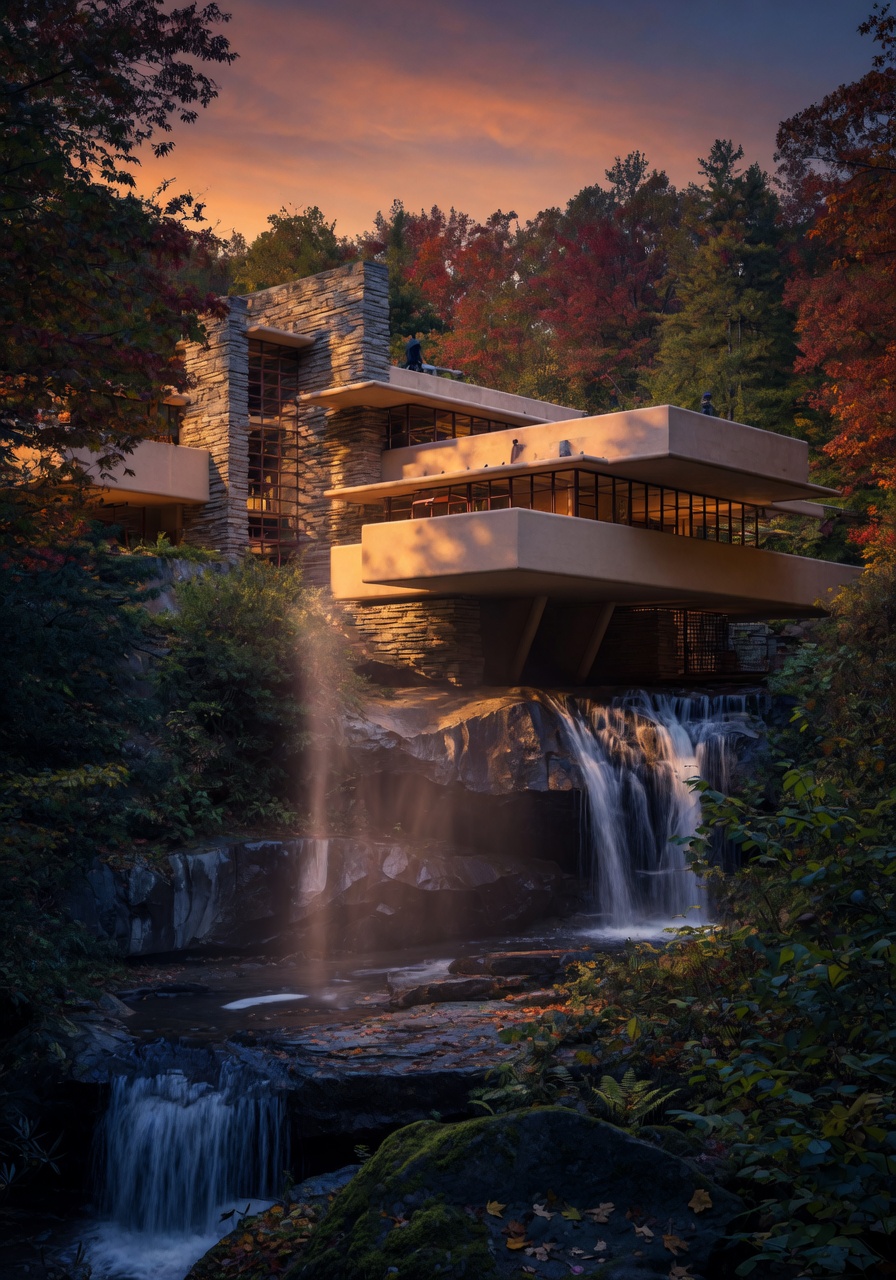
Early recognition arrived with the Prairie houses of the 1900s. The Robie House in Chicago stretched low and wide, its terraces and overhangs mirroring the flat horizon of the Midwest. Decades later, Fallingwater in Pennsylvania took the same logic further: concrete terraces cantilever over a stream so that water sound and moving light become part of daily experience. The house demanded inventive engineering, yet it proved that a private home could intensify rather than dominate its setting.
Wright’s ideas traveled well beyond single-family commissions. The Guggenheim Museum spirals upward like a coiled shell, inviting visitors to move through space at their own pace instead of climbing conventional floors. Contemporary practices continue to adapt those lessons. Projects that prioritize local materials, reduce structural waste, or weave circulation paths through existing ecosystems all trace back to his emphasis on efficiency and context. Even experimental 3D-printed houses now use on-site soils to create forms that respond to specific climate and terrain.
The relevance has only grown. As cities face hotter summers and tighter resource limits, designs that cut energy demand through orientation, daylight, and natural ventilation offer measurable advantages. Research on biophilic environments shows lower stress and better focus in spaces that maintain visual links to nature. Wright’s core claim—that architecture should strengthen rather than sever our connection to place—still supplies a practical framework for building in an era when every material choice carries long-term consequences.
Comments are closed