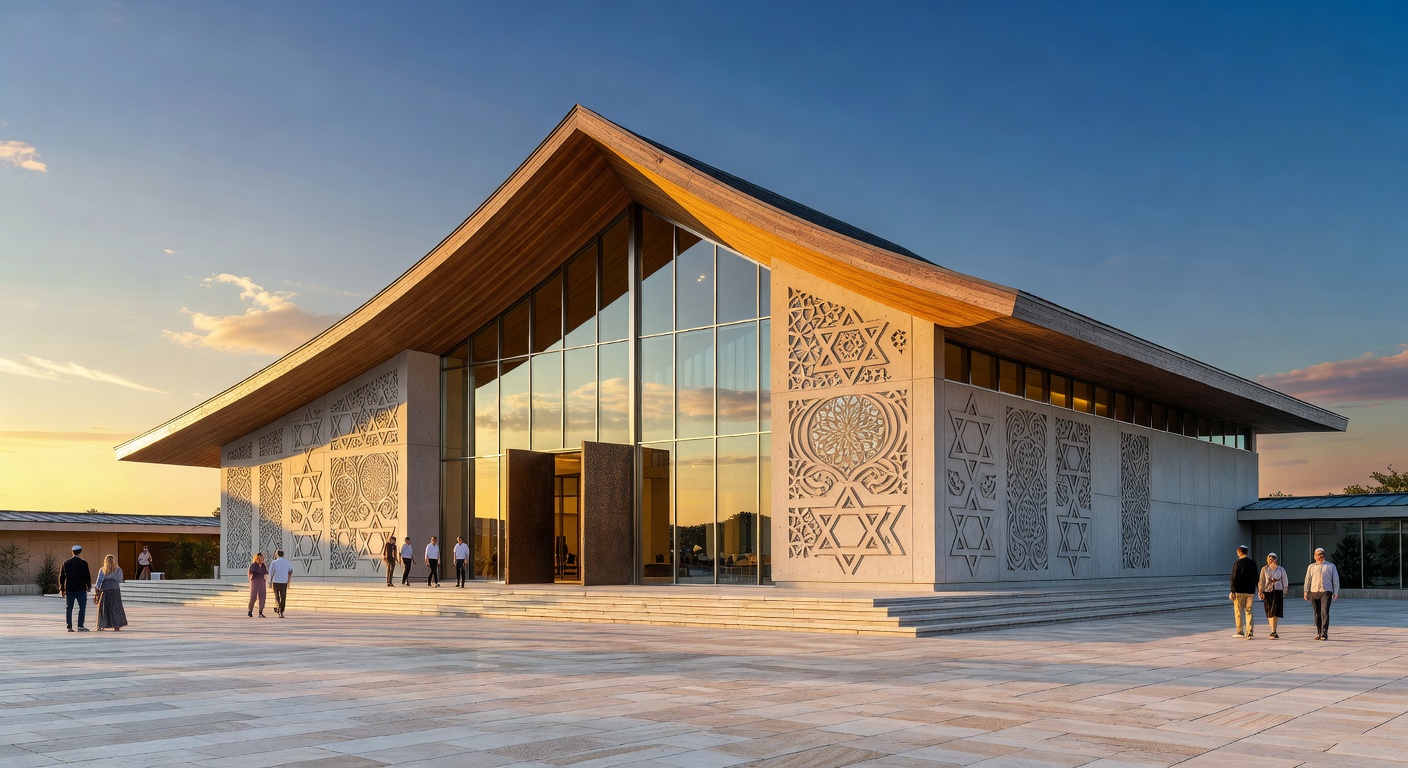
Synagogues have long served as more than places of worship—they’re communal hearts pulsing with history, ritual, and innovation. In the 21st century, their designs are undergoing a fascinating transformation, blending ancient symbolism with cutting-edge aesthetics to meet the needs of diverse Jewish communities worldwide.
Historically, synagogue architecture drew from local influences while embedding Jewish motifs. Ancient models like the Dura-Europos synagogue in Syria (3rd century CE) featured vivid wall paintings of biblical scenes, a rarity given Judaism’s aversion to graven images. Medieval European synagogues, such as Prague’s Old-New Synagogue (1270), adopted Gothic elements with sturdy vaults and narrow windows, symbolizing humility and separation from grand cathedrals. The 19th-century “temple” style in America and Germany introduced domed sanctuaries and organ lofts, reflecting Reform Judaism’s assimilationist ethos. These evolutions mirrored diaspora adaptations, from Moorish arches in Ottoman lands to stark modernist boxes post-Holocaust.
Today, contemporary designs prioritize flexibility, inclusivity, and resilience. Key features include multifunctional spaces that double as social hubs, educational centers, and even emergency shelters—vital amid rising antisemitism. Natural light floods interiors through expansive clerestory windows or skylights, evoking the divine radiance of the eternal flame (ner tamid). Bimahs (altar platforms) are often centralized for egalitarian worship, facing Jerusalem without hierarchical barriers. Sustainable materials like reclaimed wood, solar panels, and green roofs align with tikkun olam (repairing the world), as seen in Congregation Beth Israel’s net-zero design in San Diego.
Modern examples shine brightly. Zvi Hecker’s spiraling Gesher Synagogue in Israel (1990s) twists like a DNA helix, symbolizing Jewish continuity and genetic heritage. In Los Angeles, Craig Hodgetts’ Wilshire Boulevard Temple (2014) features a luminous, origami-folded canopy of aluminum and glass, creating a “tent of meeting” that welcomes 1,500 congregants while housing a museum and school. New York’s Congregation Rodeph Sholom (2018) by FXCollaborative integrates a glowing oculus over the sanctuary, projecting star-like patterns that nod to the zodiac mosaics of ancient Galilean synagogues. In Berlin, the Eberswalde Synagogue (2001) by Hermann Kaufmann employs a minimalist cube of concrete and glass, its transparency fostering dialogue in a city scarred by history.
These innovations matter profoundly today. Amid urbanization and declining memberships, synagogues must attract younger, tech-savvy Jews by feeling vibrant and relevant. Post-October 7, 2023, heightened security demands—blast-resistant glass, hidden safe rooms—without compromising spiritual openness. Design fosters community resilience, blending tradition with progress to combat isolation. As architect Sharon Neel notes, “A synagogue isn’t frozen in amber; it’s a living vessel for Jewish life.”
Ultimately, contemporary synagogue architecture reaffirms identity in a fragmented world. By honoring the past while embracing the future, these spaces ensure Judaism’s enduring light—adaptable, beautiful, unbreakable.
(Word count: 448)
Comments are closed