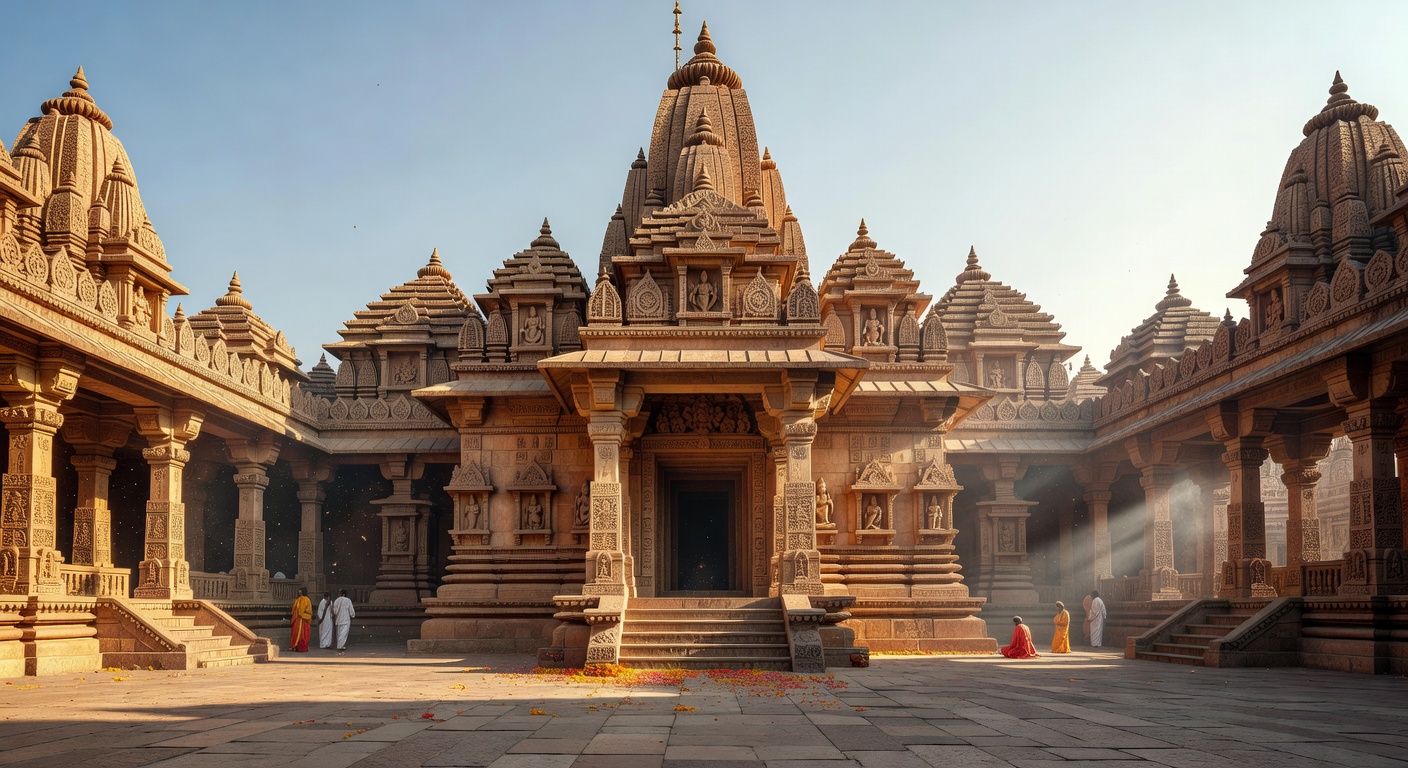
Stepping into the intricate world of Hindu architecture reveals spaces that transcend mere construction, embodying profound spiritual geometries known as mandalas. These ancient designs transform buildings into portals of cosmic alignment, inviting visitors to experience harmony on multiple levels. From the bustling temples of India to serene meditation halls abroad, mandala principles continue to shape environments that feel alive with purpose.
Delving into the key features, Hindu mandala architecture relies on sacred geometry where a central point, the bindu, anchors the entire structure, symbolizing the origin of the universe. This is surrounded by concentric layers or grid divisions, often in squares representing the earth and circles for the heavens. Symmetry ensures balance, with careful orientation to cardinal directions to channel positive energies. In practice, this means temple layouts feature an inner sanctum at the core, surrounded by ambulatory paths for circumambulation, and outer enclosures mirroring the mandala’s expansion. Carvings of deities, lotuses, and yantras enhance the spiritual ambiance, turning walls into storytelling canvases that educate and inspire.
Historically, these concepts emerged in ancient India during the Vedic era, evolving through epics and treatises that integrated cosmology with construction. The Vastu Purusha Mandala, a diagram of a cosmic being, dictated how spaces should be divided for optimal flow. Iconic historical sites like the Sun Temple at Konark or the Brihadeeswara Temple showcase this, where the entire complex aligns with solar and stellar movements. Over time, this spread influenced regional styles, from the curvilinear shikharas of the north to the pyramidal vimanas of the south, all rooted in mandala harmony.
In contemporary settings, modern examples breathe new life into these traditions. The BAPS Swaminarayan Akshardham in Gandhinagar uses mandala grids for its expansive grounds, incorporating water features and gardens in precise positions. Globally, wellness resorts and yoga centers adopt these designs for their calming effects, while some urban planners reference mandalas for community layouts that promote social cohesion and ecological balance.
Why does mandala architecture matter in today’s world? Amid rapid urbanization and technological overwhelm, it offers timeless lessons in creating spaces that nurture the soul. Studies suggest that symmetrical, nature-aligned environments reduce anxiety and enhance focus, validating ancient wisdom with modern science. It fosters cultural pride and global appreciation of Hindu heritage, while inspiring sustainable architecture that respects natural rhythms. By reminding us of our place in the cosmos, these designs encourage mindful living, environmental stewardship, and a quest for inner peace that resonates across cultures and generations.
Comments are closed