Coastal communities have faced the ocean’s raw force for generations, and the smartest responses have always come from working with water rather than trying to block it. Long before engineering codes existed, builders in the Netherlands and parts of Southeast Asia set homes on stilts so floodwaters could pass underneath without tearing structures apart. The 1900 Galveston hurricane drove similar changes across Texas, pushing entire neighborhoods onto raised foundations after the storm killed thousands. Those early adaptations still shape responses today. After Hurricane Sandy, elevated homes in retrofitted neighborhoods cut damage by as much as 80 percent, proving that height and flexibility deliver results when the next surge arrives.
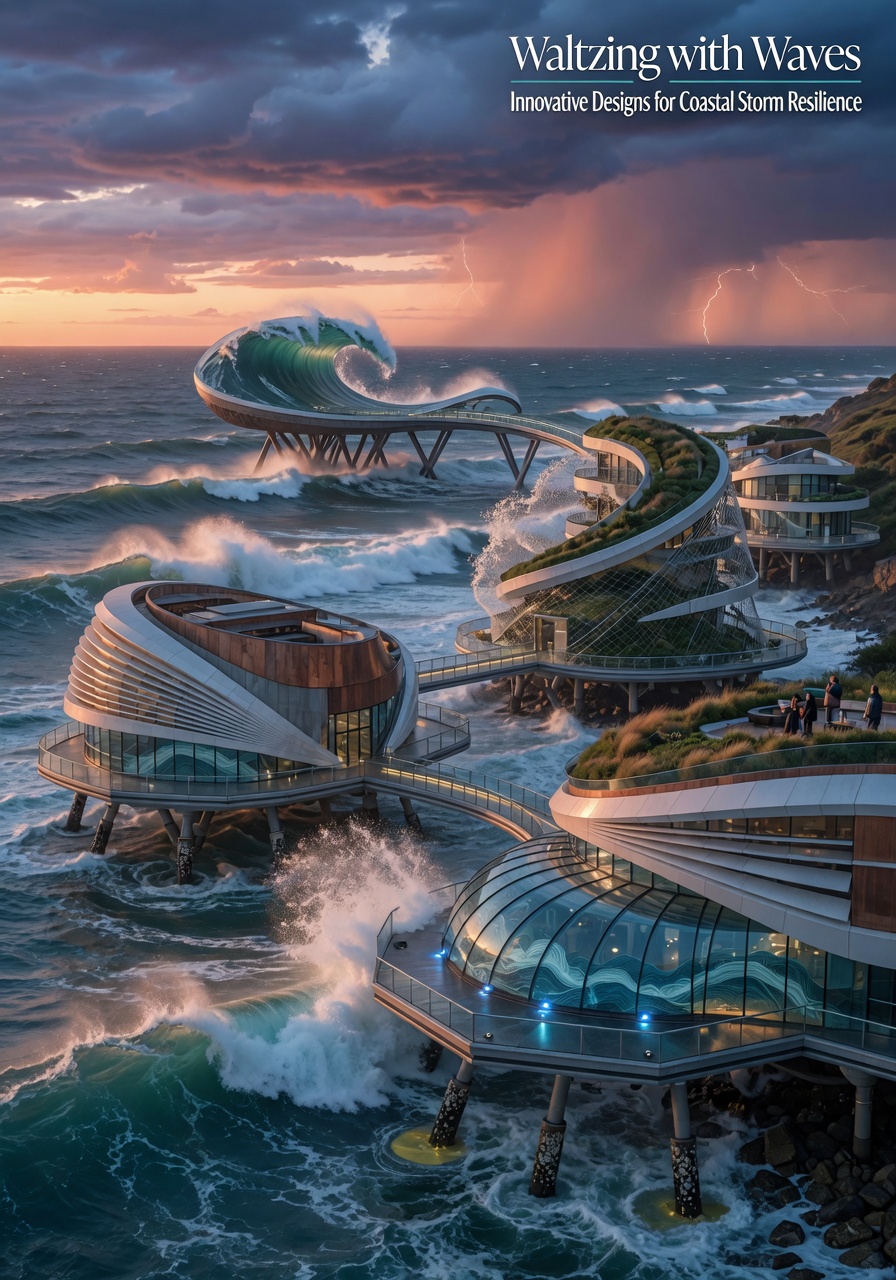
Modern designs focus on letting wind and water move through rather than crash against solid barriers. Homes sit on deep pilings or piers that keep living areas above expected flood heights while waves flow freely below. Roofs take aerodynamic shapes, windows use impact-rated glass, and walls combine reinforced concrete with fiber-cement siding to stand up to erosion. Outside, permeable surfaces and native plants soak up rainwater, while living shorelines and low berms soften wave energy without the erosion problems that rigid seawalls often create farther down the coast.
Real-world projects show these ideas in action. New York’s Big U turns Lower Manhattan’s edge into a chain of parks that absorb floodwater and still serve as public space. In Florida, stricter codes now require stronger roof ties and higher foundations; communities like Punta Gorda rebuilt after one hurricane and then rode out later storms with little additional loss. Across the Atlantic, floating homes in Maasbommel rise and fall with river levels, showing that mobility can work alongside fixed protections when water keeps climbing.
These choices carry weight as storms intensify and seas rise. Higher insurance costs and repeated displacement already hit vulnerable shorelines hard. Thoughtful elevation and natural buffers lower repair bills, protect jobs tied to ports and tourism, and keep wetlands healthy enough to blunt future surges on their own. Coastal regions that invest now turn repeated threats into places that stay livable and connected to the water that defines them.
Comments are closed