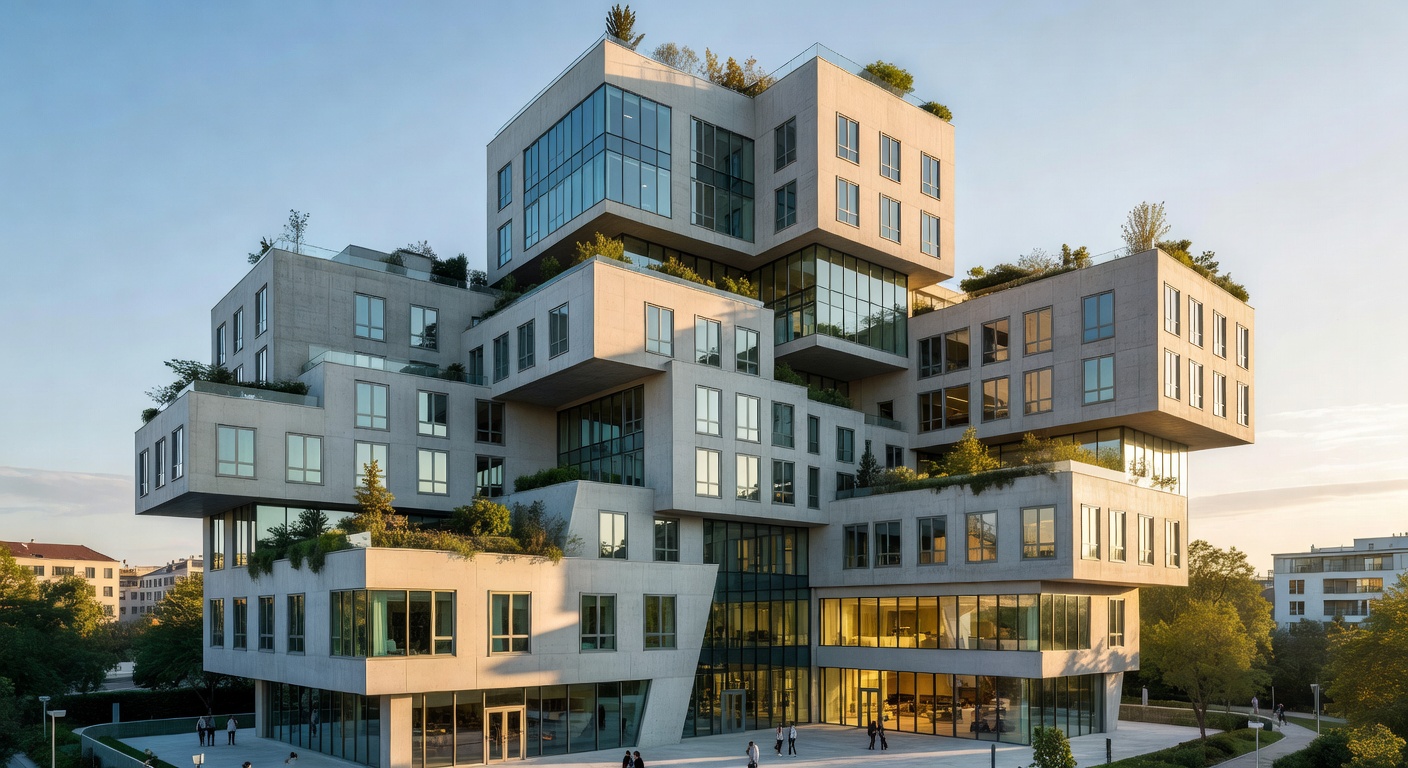
Bjarke Ingels doesn’t just design buildings—he crafts experiences that bend the rules of architecture while serving real human needs. As the founder of Bjarke Ingels Group (BIG), this Danish architect embodies “playful functionalism,” a philosophy where whimsy meets utility, turning structures into dynamic playgrounds for living, working, and thriving. It’s architecture that laughs in the face of rigidity, proving that form can follow function without sacrificing delight.
At its core, playful functionalism reimagines the modernist mantra of “form follows function” by injecting stacks of fun. Ingels draws from the functionalist traditions of the early 20th century, like Le Corbusier’s efficient machines for living, but flips the script with hedonistic twists. Think modular stacking, organic shapes, and interactive elements that respond to users and environments. Functionality isn’t austere; it’s exuberant. A prime feature is verticality with a twist—buildings that stack programs like Lego bricks, creating communal spaces amid density. Sustainability weaves in seamlessly, often through playful biomimicry, like facades that mimic dunes or mountains to harness wind and sun.
Historically, this ethos echoes Scandinavian modernism’s blend of utility and humanism, but Ingels amps it up with digital-age tools like parametric design. His breakthrough came with VM Houses in Copenhagen (2005), twin complexes shaped like a V and an M, where asymmetrical apartments maximize light and views while fostering social buzz through shared terraces. It’s functionalism on steroids: efficient layouts, but with porthole windows and wild geometries that make residents grin.
Fast-forward to modern marvels like VIA 57 West in New York (2016), a crystalline pyramid slicing Manhattan’s skyline. Its sloped courtyard doubles as a public park, funneling sunlight deep into the urban fabric while housing 700 apartments. Or CopenHill in Copenhagen (2019), a waste-to-energy plant topped with an artificial ski slope, hiking trail, and climbing wall. What could be a hulking industrial eyesore becomes a recreational hub, burning trash to power 150,000 homes and inviting citizens to shred powder atop it. These aren’t gimmicks; they’re ingenious responses to climate crises and urban sprawl.
Why does this matter today? In an era of climate urgency and social isolation, Ingels’ approach counters soulless glass towers with architecture that builds community and resilience. Playful functionalism makes sustainability sexy—turning green tech into adventures that people want to engage with. It challenges the binary of beauty versus utility, showing how joy can drive efficiency. As cities densify and resources dwindle, Ingels proves we can inhabit innovative, equitable spaces that spark creativity and connection. His work isn’t just buildings; it’s a blueprint for a future where living well feels like play. In BIG’s hands, architecture evolves from static monument to living organism, reminding us that the best designs don’t just stand—they dance.
Comments are closed