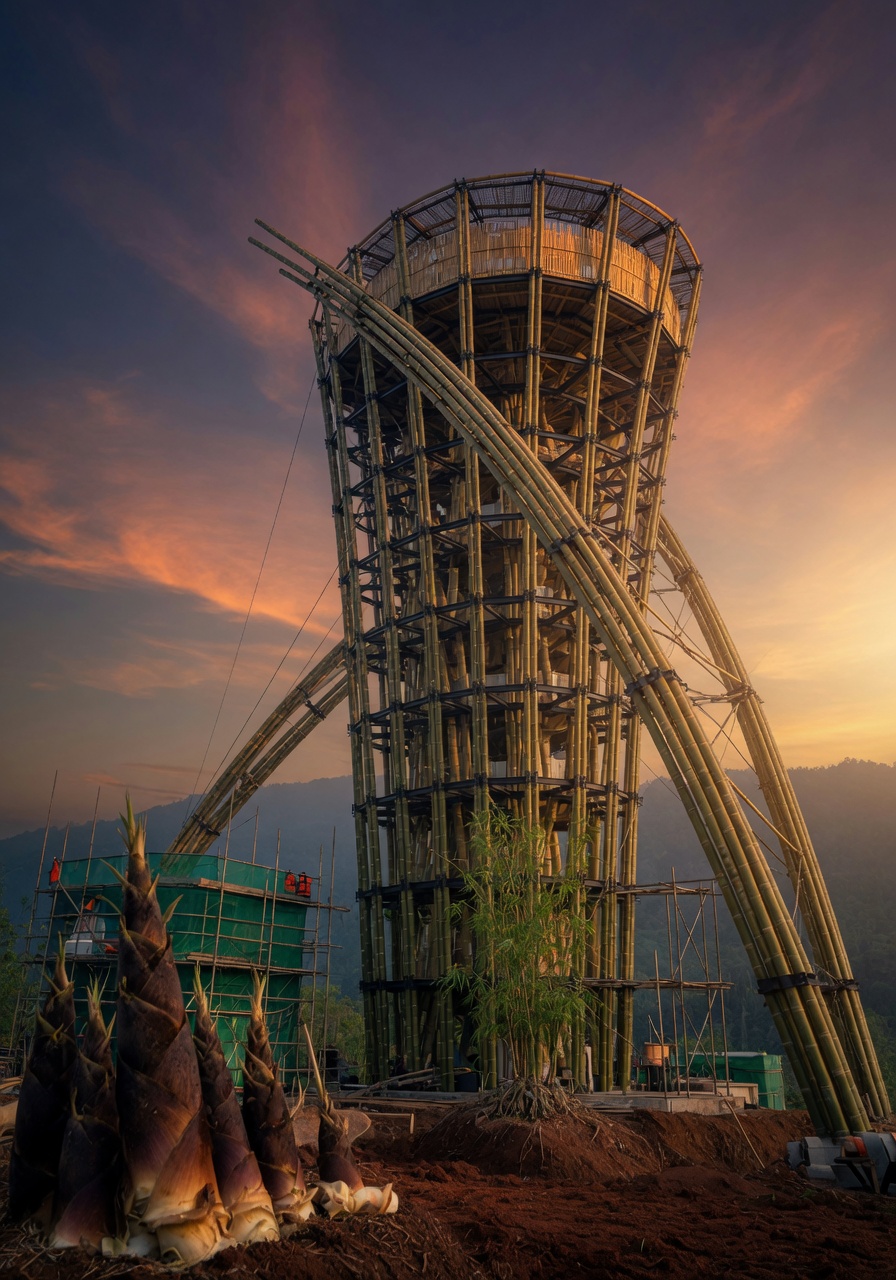
Bamboo stands out among building materials for growing to usable size in just a few years while delivering the kind of flexibility that lets structures ride out earthquakes. Its hollow stalks and layered fibers create a natural balance of lightness and strength that has caught the attention of engineers looking beyond steel and concrete.
The plant’s performance stems from measurable traits. Its tensile strength often rivals steel on a weight-for-weight basis, yet bamboo weighs far less and bends without snapping. Silica deposits in the outer skin discourage insects and rot, while the internal nodes act as built-in stiffeners that spread loads along the length of each pole. Once dried and treated, bamboo poles handle compression and bending forces that typically destroy ordinary softwoods, which explains their growing use in regions where ground movement is common.
Builders in Asia recognized these advantages long before lab tests existed. In China, bamboo scaffolding still rises beside glass towers because crews can assemble and adjust it quickly at height. Japanese carpenters wove split bamboo into lattice walls that braced temples against shaking while adding visual rhythm. Across the Philippines and Indonesia, entire communities built on bamboo stilts that allowed air to circulate beneath floors and let the frames flex during typhoons instead of resisting them outright.
Recent projects show how these lessons translate to current codes and designs. Architect Simon Vélez has completed large pavilions in Colombia where bamboo poles connect through mortar-filled joints, eliminating the need for steel trusses over wide spans. The Green School in Bali uses curved bamboo members to form open classrooms that stay comfortable without mechanical cooling. In Vietnam and Costa Rica, multi-story frames wrapped in earth-based plasters are being monitored for compliance with seismic standards, proving the material can meet regulatory demands when properly engineered.
The environmental case rests on straightforward numbers. Certain species reach structural maturity in three to five years and pull carbon from the atmosphere faster than most trees. Cutting the mature culms leaves the root system intact, so the grove regrows without replanting or chemical inputs. On land too poor for food crops, bamboo can still produce consistent harvests while storing more carbon than is released during harvesting and basic processing.
When traditional joinery meets updated testing and connection details, bamboo moves from niche experiment to practical option for low-carbon, high-resilience buildings that can last for decades.
Comments are closed